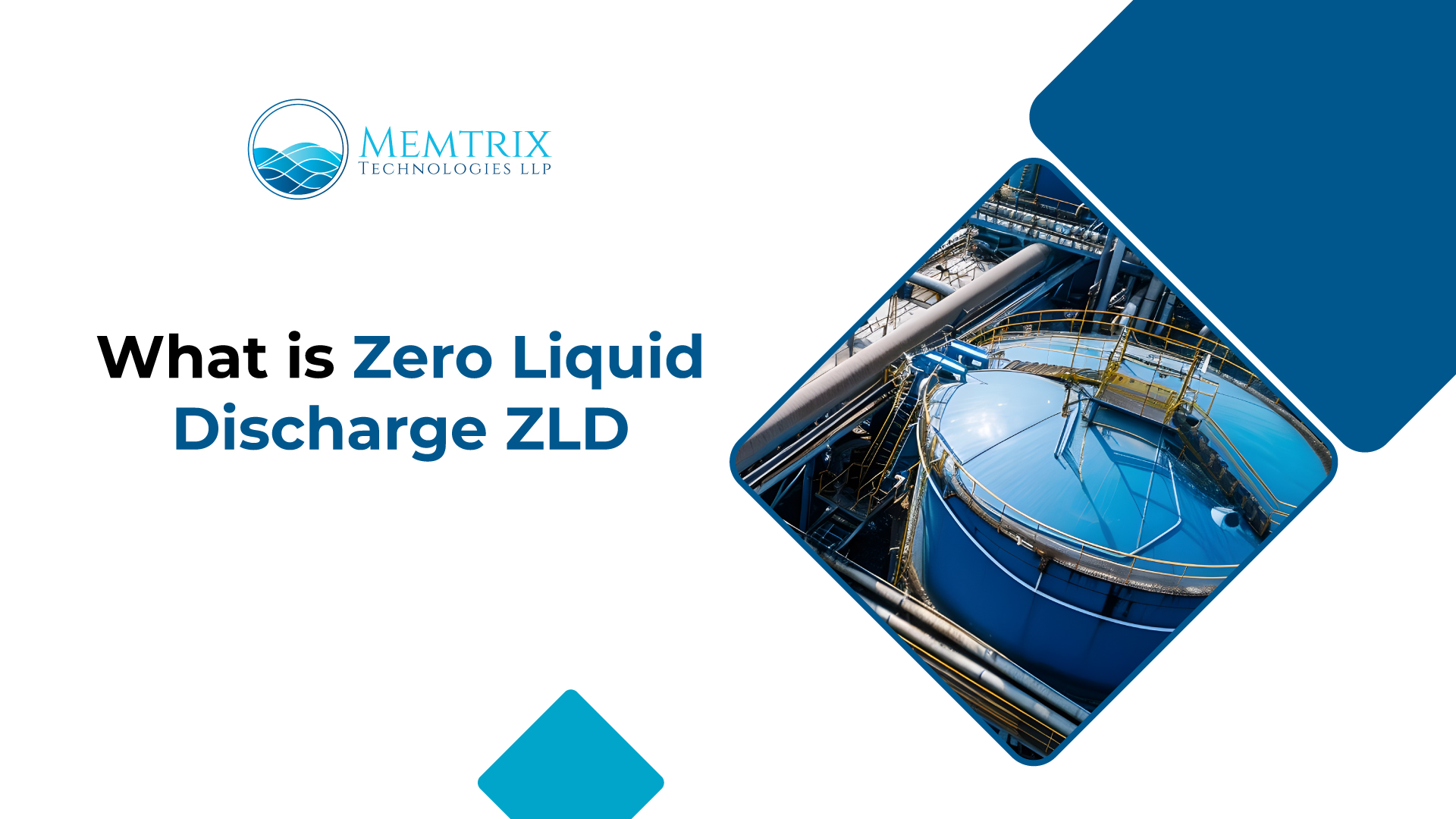
Zero liquid discharge, or ZLD, is a wastewater treatment approach that seeks to eliminate any discharge of liquid waste from a facility. The system recovers as much water as possible instead of releasing treated effluent into the environment, leaving only solid residue to be disposed of.
ZLD is an increasingly important process for industries that are subject to strict discharge regulations, water scarcity and rising water costs. It is a powerful solution but also requires careful design, higher investment and efficient operation.
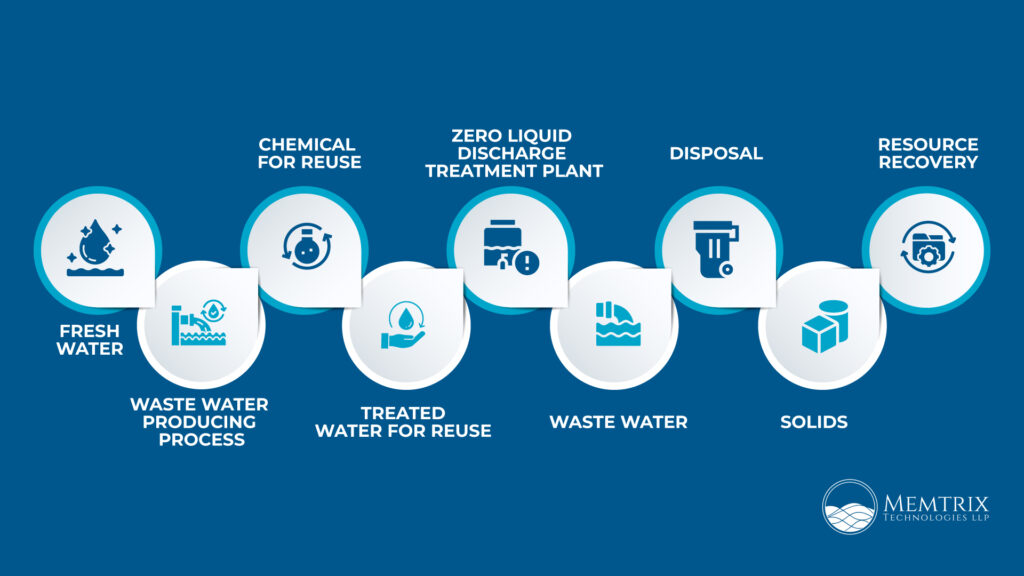
What does ZLD mean?
ZLD is an acronym for Zero Liquid Discharge. The aim is to treat the wastewater to a level where nearly all the water can be recovered for re-use and no liquid effluent is discharged from the site.
This is not to say that there is no residue at the end of the process. The salts, concentrated residues and the solid waste still have to be taken care of. The important thing is that there is no liquid coming out.
ZLD is often used in industries where water recovery is valuable and waste water disposal is difficult. This is particularly true in water stressed regions or in plants with high contaminant loads. ## How ZLD systems work
A ZLD system generally comprises a series of treatment processes. The process often starts with preliminary and biological treatment, followed by membrane filtration, concentration and evaporation.
Many designs use membranes to remove suspended solids and recover reusable water. The residual concentrated stream is then treated by thermal or evaporative methods.
The aim is to remove as much of the clean water from the dissolved solids as possible. The recovered water can be recycled in the plant, reducing the fresh intake to a minimum. ## Major stages in ZLD
A typical ZLD system can include screening, equalisation, biological treatment, ultrafiltration, reverse osmosis, evaporator units and crystallisers.
The first steps take some of the load off the later processes. Membranes remove smaller particles and enhance water quality before concentration steps are initiated.
The most concentrated stream is treated in the evaporator and crystalliser sections. They reclaim the last part of water, and crystallise dissolved salts into a solid.
Use Cases for ZLD
ZLD is widely used in industries producing complex or high-salinity wastewater. These include textiles, chemicals, power, pharmaceuticals, dyes and some manufacturing sectors.
It is used in applications where regulation is tight or where recovery of water is of strong economic value. ZLD is also adopted in some areas to reduce environmental impact and support sustainability goals.
Municipal systems generally do not pursue full ZLD as often as industries, mainly because of the cost and scale differences. It is mainly used by industrial plants.
Advantages of ZLD
The major advantage of ZLD is water recovery. The recycling of treated water can help to reduce the demand for fresh water and can help water security.
ZLD minimises the discharge to the environment. This may facilitate compliance in highly regulated areas.
Another benefit is enhanced sustainability performance. Companies can demonstrate that they are reducing the impact of wastewater and recovering resources more efficiently.
Challenges for ZLD
There are many challenges to ZLD. The most important is cost. Because of the advanced treatment and energy-intensive concentration steps of the system, installation and operation can be costly.
Another issue is energy use. Thermal processes and evaporation require a lot of power which can add to operating cost.
The system also has to be run by skilled personnel and maintained regularly. Performance and reliability of the plant can be adversely affected if not properly managed.
ZLD Membranes
Modern ZLD systems play a vital role for membrane technology. It also helps to remove suspended solids and reduces the load on downstream evaporation equipment.
Membranes can lower the total energy consumption by increasing water recovery earlier in the process. They also make the system more efficient overall .
The key to making ZLD more practical in many projects lies in good membrane performance. Without effective membrane stages, the system can become too expensive or difficult to operate. ## ZLD versus conventional treatment
Conventional treatment is mainly designed to meet discharge standards or prepare water for partial reuse. It does not normally seek to eliminate liquid discharge.
ZLD goes a step further by reclaiming nearly all the water and turning the rest of the waste into solids. This is far more resource intensive than conventional treatment.
Conventional treatment may be less costly for facilities that do not require complete liquid elimination. ZLD is most advantageous when water recovery, compliance and elimination of discharge are strategic imperatives.
Industries adopting ZLD
Usually, ZLD is an option for industries working in water-stressed areas or with challenging wastewater contaminants. In such cases the cost can be justified by the value of water recovery.
ZLD is often used in textile and dyeing plants due to high dissolved solids and colour in the effluent. ZLD is also used by the chemical and pharmaceutical industries for reuse and regulatory compliance.
Power plants and large manufacturing plants may also use ZLD where water conservation is a concern. The decision is usually based on both regulation and long term water strategy. ### Is ZLD always necessary?
ZLD is not required for each plant. In some cases, good quality conventional treatment with partial reuse is sufficient to meet operational and environmental targets.
The choice depends on the availability of water, rules for discharge, composition of wastewater and project budget. For smaller plants or low complexity wastewater, ZLD may be more than needed.
But for industries with limited choices for discharge or where water pressure is acute, ZLD may be the appropriate long-term solution. This should be seen as a strategic system and not as a default requirement.
ZLD Future
Future ZLD is likely to be more efficient, less energy intensive and more integrated with membrane systems. With further technological development ZLD may become more applicable for a wider range of industries.
Hence, companies are increasingly seeking systems that combine reuse, recovery and sustainability. This will ensure that demand for ZLD remains high, especially in water stressed areas.
At the same time, the industry will be looking for solutions that will lower operating cost. Better process integration and smarter design holds the key to making ZLD more widely available.Final remarks
Zero Liquid Discharge is a strong wastewater treatment method to recover water and prevent liquid waste discharge. This is particularly important in water-stressed areas and in sectors with stringent environmental standards.
Although ZLD is more costly and complex to operate, it provides significant benefits in water recovery, sustainability, and compliance. It can be one of the most efficient water management approaches for the appropriate application.
Ready to take the next step towards better future? Consult our experts today!
Click here for location: https://maps.app.goo.gl/kj8TTUL64GBkwUh96
Call us or whatsapp us at +91 6355038616
Follow . Share . Like
Additional Read
Best MBR Membrane Manufacturer in India: How to Select the Right Technology Partner