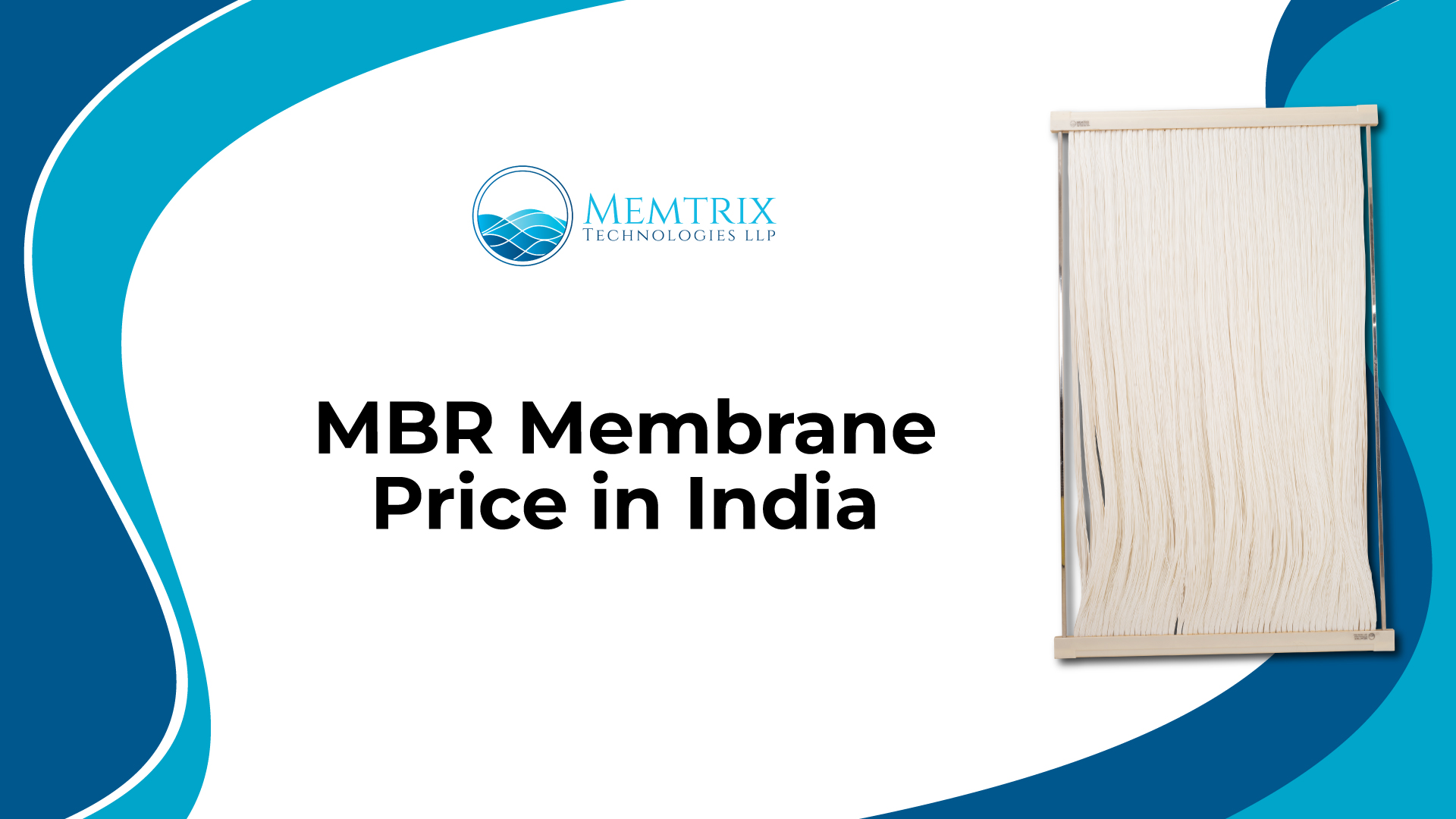
The MBR membrane price in India varies widely depending on membrane material, module capacity, brand, configuration, application, and order quantity. A basic replacement module may have a very different price from a complete MBR skid designed for industrial wastewater reuse. Many buyers make the mistake of comparing only the purchase price per module. In practice, the real cost includes membrane area, installation, aeration, energy consumption, chemical cleaning, maintenance, spare parts, downtime, and eventual replacement. A proper price evaluation should therefore consider both initial investment and total cost of ownership.
What Determines MBR Membrane Price?
Membrane material
The polymer is one of the key price factors. PVDF membranes are widely used in MBR systems because they provide good mechanical and chemical resistance. PTFE membranes may command a higher price because of their material properties and manufacturing complexity.
The membrane material should be selected according to wastewater characteristics, not simply according to the lowest quotation. Wastewater containing solvents, oils, high temperatures, or aggressive chemicals may require a more robust membrane.
Hollow fibre or flat sheet
MBR membranes are generally available in hollow-fibre or flat-sheet configurations.
Factor Hollow-fibre membrane Flat-sheet membrane
| Factor | Hollow-fibre membrane | Flat-sheet membrane |
| Typical strength | High membrane area per module | Robust individual plates |
| Footprint | Compact | May require more space |
| Cleaning | Requires suitable air scouring and backwashing | Often mechanically accessible |
| Replacement | Module-based replacement | Cassette or plate replacement |
| Price | Depends on fibre design and packing density | Depends on plate size and construction |
The price difference is influenced by membrane area, module design, support structure, potting quality, and aeration requirements.
Membrane area and Capacity
MBR membranes are normally sized according to required permeate flow and design flux. A plant requiring 100 cubic metres per day will need significantly less membrane area than a plant treating 1,000 cubic metres per day.
The basic relationship is:
However, design flux should not be maximised without considering fouling risk. A higher flux may reduce membrane area but can increase cleaning frequency, energy use, and the possibility of irreversible fouling.
Brand and technology Origin
Imported brands may carry higher prices because of:
- International manufacturing costs.
- Freight and insurance.
- Customs duties and taxes.
- Currency fluctuations.
- Distributor margins.
- Overseas technical support.
- Longer replacement logistics.
An Indian MBR Membrane may offer lower landed cost and faster availability. However, purchasers should verify performance data, service support, and compatibility before making a decision.
Replacement Compatibility
Retrofit membranes designed to replace existing modules may involve engineering, adapters, header modifications, or changes to aeration systems. A direct replacement may cost more than a standard module but can reduce civil modifications and plant downtime.
Some Indian suppliers offer retrofit membranes intended to replace established imported modules. A supplier listing for a retrofit hollow-fibre module, for example, describes local availability and cost-effectiveness as key benefits.
Indicative Price Ranges
Publicly listed prices should be treated only as preliminary indicators. A supplier’s final quotation may change after reviewing wastewater data, flow, membrane area, module dimensions, and delivery terms.
Some market listings show individual membrane-related products ranging from a few thousand rupees to approximately ₹25,000 per unit, depending on product type and specification. Other supplier-published international comparisons quote membrane costs by square metre, with premium imported products often priced above locally manufactured alternatives.
These figures are not universal price benchmarks. Buyers should request a project-specific quotation that clearly states:
- Price per module.
- Membrane area per module.
- Number of modules required.
- GST and freight.
- Installation and commissioning.
- Warranty.
- Spare modules.
- Cleaning chemicals.
- Technical support.
- Delivery schedule.
Initial Cost Versus Lifecycle Cost
The cheapest membrane may not be the most economical solution. A membrane with lower initial cost may require higher aeration, more frequent cleaning, or earlier replacement.
Lifecycle cost includes:
- Capital cost.
- Energy consumption.
- Membrane cleaning.
- Replacement frequency.
- Labour and maintenance.
- Sludge disposal.
- Production downtime.
- Performance losses caused by fouling.
- Technical service charges.
For example, a membrane that costs 15% more but lasts 30% longer and requires less cleaning may deliver a lower total cost over five years.
How to Reduce MBR Membrane Cost
Improve pretreatment
Fine screening, grit removal, oil separation, and equalisation help protect the membrane. Poor pretreatment allows hair, fibres, plastics, oil, and large particles to enter the MBR tank and increase fouling.
Select realistic flux
Designing at an unnecessarily high flux can increase fouling and cleaning requirements. A conservative flux often improves stability and membrane life.
Compare local and imported options
Request quotations from both an Indian MBR Membrane Supplier and authorised imported-brand distributors. Compare equivalent membrane area and technical performance rather than comparing only unit prices.
Plan for spares
Maintaining critical spares reduces production risk. The buyer should assess whether the supplier can provide urgent replacement modules and maintain inventory in India.
Evaluate the complete package
A membrane supplier offering engineering, commissioning, optimisation, and after-sales service may provide better long-term value than a vendor selling only the membrane module.
Conclusion
The MBR membrane price in India depends on many factors, including material, configuration, membrane area, brand, application, and support requirements. Public prices can help establish an initial budget, but they should not be treated as final project costs.
The best purchasing decision compares lifecycle performance, replacement availability, energy consumption, cleaning requirements, warranty, and technical support. A reliable MBR Membrane Manufacturer India can help select the correct membrane area and operating conditions, preventing unnecessary expenditure and future performance problems.
Ready to take the next step towards better future? Consult our experts today!
Click here for location: https://maps.app.goo.gl/kj8TTUL64GBkwUh96
Call us or whatsapp us at +91 6355038616
Follow . Share . Like
Additional Read
How Water Recycling Systems Help Industries Reduce Operational Costs