Smart cities are based on efficient management of resources and water is one of the most important resources they need to manage well. Wastewater reuse technology enables cities to reduce their demand for freshwater, increase sustainability and build more resilient urban water systems.
Smart cities don’t view wastewater as waste – they view it as a useful resource. This change allows them to use reclaimed water to support landscaping, flushing, cooling, construction and other non-potable applications.
Why Smart Cities Need to Reuse
Cities use up huge amounts of water every day. As populations grow, the pressure on municipal supply systems increases.
At the same time, the generation of wastewater increases in parallel with the urbanisation. If that wastewater is just dumped after treatment, a precious source of water is lost.
Wastewater reuse technology enables smart cities to close this loop. By recovering water locally and reusing it for suitable purposes, cities will reduce their dependence on freshwater and improve their long-term resilience.
What Wastewater Reuse Technology is
Wastewater reuse technology is the treatment of used water to a level appropriate for specific non-potable uses. The precise level of treatment depends on what the water will be used for.
For example, irrigation water may need different quality standards than water for flushing toilets or cooling towers. Advanced treatment systems can be designed to meet these needs.
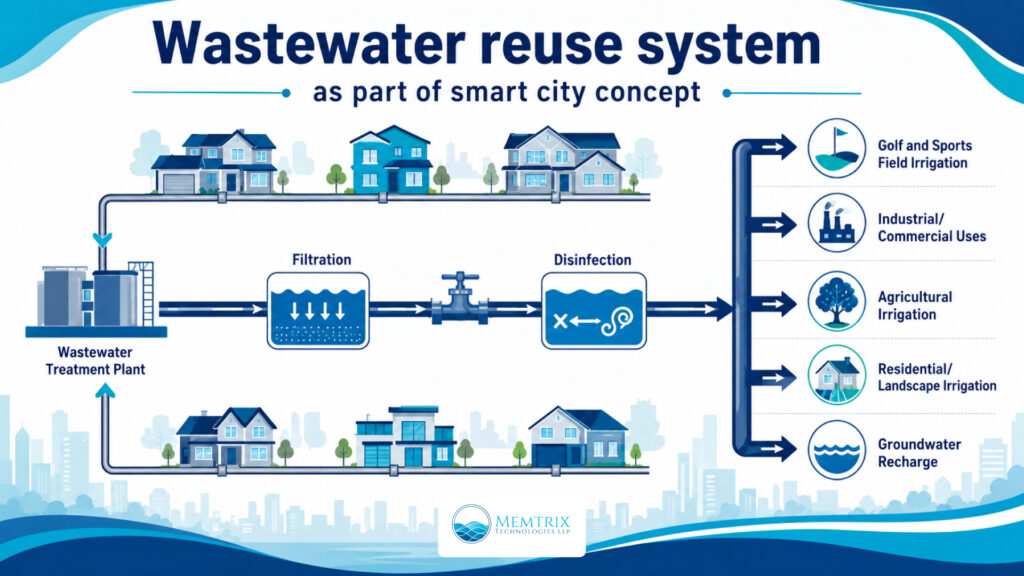
This usually involves a combination of biological treatment, membrane filtration, disinfection and polishing. The objective is to produce safe and reliable reclaimed water for urban reuse applications.
The use of Reuse Systems in Smart Cities
Smart cities have a few practical uses for reclaimed water. Typical applications include landscape irrigation for parks, greenbelts and road medians.
Another is flushing toilets in commercial buildings, hotels, malls and public facilities. This reduces the demand for potable water in daily urban operations .
Reclaimed water is also used for cooling systems, construction activities and some industrial processes. In this way cities can ease the pressure on supplies of fresh water, while maintaining essential services.
Memtrix Membranes’ Role
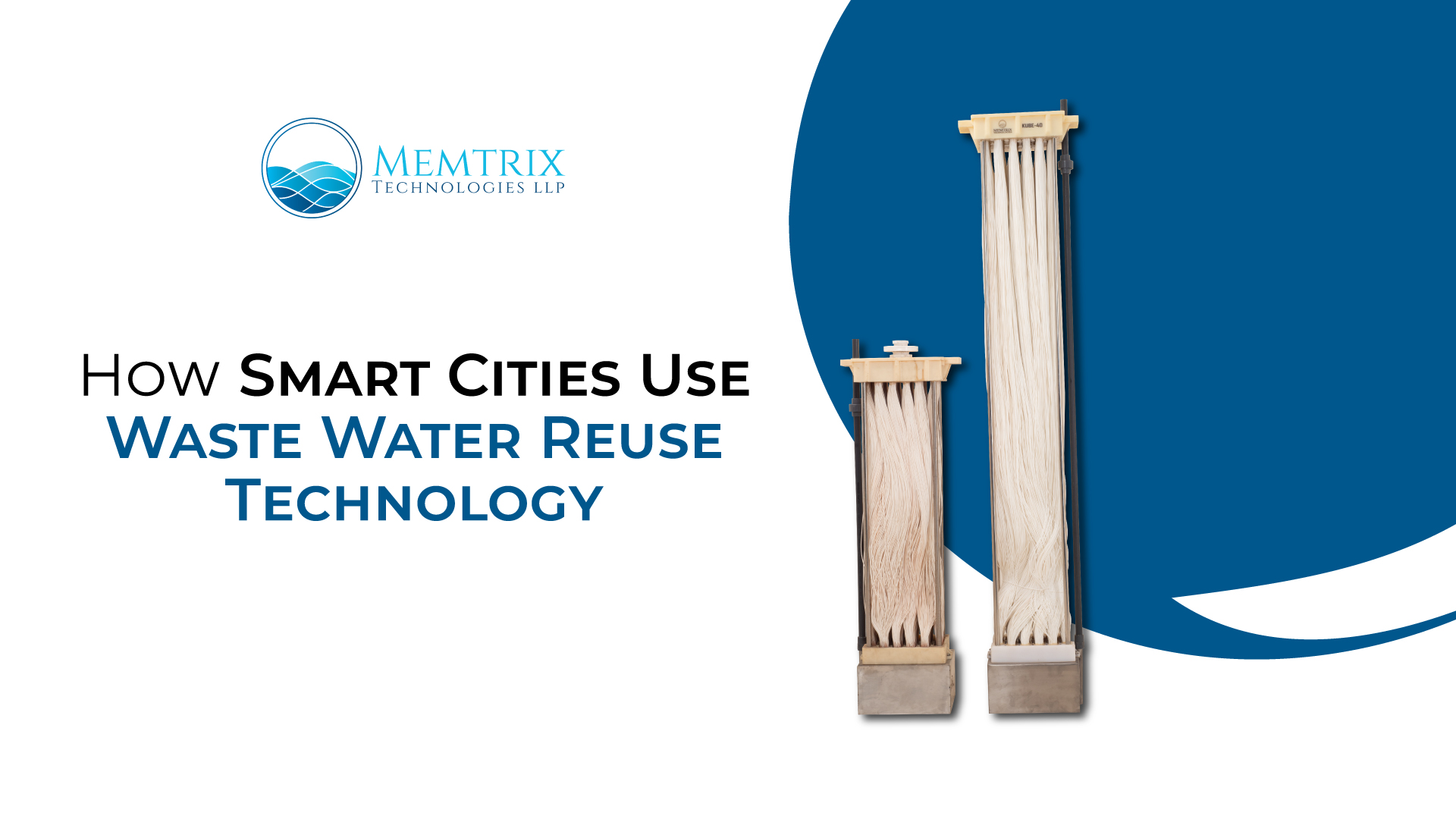
Membrane systems are an integral part of reuse projects as they increase the quality of the water and provide a more consistent product of reclaimed water. Before the final disinfection, common technologies are MBR, ultrafiltration, etc.
Membranes are more effective in removing suspended solids, pathogens and other contaminants compared to conventional treatment alone. This makes the treated water more suitable for reuse in urban areas.
“Membrane technology is very valuable for smart cities as it allows for compact treatment plants. This is important in urban environments where space constraints exist and large treatment footprints are difficult to construct.
Urban Water Management Benefits
There are various advantages to smart cities using wastewater reuse. The most obvious is the decreased demand for fresh water.
It also enhances water security by providing a local water supply that is not entirely reliant on external sources. This is especially important during times of drought or seasonal shortages.
Reuse systems also reduce the load on drainage and receiving water bodies by mitigating the volume of discharge. This leads to a better environmental performance and a more balanced water planning in time.
Support for Sustainability Goals
Smart cities are meant to be environmentally efficient and technologically advanced. Wastewater reuse helps them meet both the objectives.
Cities recycle and reuse water, reducing waste and maximising existing infrastructure. This supports circular resource management (a key concept in sustainable urban planning).
Plus, reuse allows cities to show off their progress on water conservation and climate resilience. This makes it a highly strategic investment at a time of increasing pressure on urban infrastructure.
What Cities are up Against
While wastewater reuse technology has its value, it also has challenges. One problem is public acceptance, particularly where reclaimed water is to be applied in visible urban settings.
Another worry is the reliability of treatment. Consistent water quality is critical in reuse applications and cities need systems that can perform consistently.
There are also challenges of cost and coordination. Reuse systems require multi-departmental planning; water supply, sanitation, urban development, and facility management.
Design Considerations
A good planning is the beginning of a successful reuse system. Cities need to know where the reclaimed water will be used and what level of quality is required.
The treatment design must match the application, be it irrigation, flushing, cooling or process reuse. Overdesign increases cost, underdesign creates quality problems.
Infrastructure for monitoring, storage, pumping and distribution is also important. Re-use system is only useful if the water can be reliably supplied to the point of use.
Smart Monitoring and Automation
Smart cities often use digital tools to better manage water systems. The same goes for reuse networks.
Automation monitoring can track flow, quality, tank levels and treatment performance as it happens. This allows operators to detect problems early and maintain supply stability.
Data driven control also improves efficiency by optimising energy use and chemical dosing. Smart city wastewater reuse is not only about treatment but also about intelligent operation.
Urban Reuse in the Future
As pressure on city water increases, smart cities are likely to use more technology to reuse wastewater. More cities will look for ways to reduce their fresh water use while becoming more environmentally sustainable.
As treatment systems become more compact and economical, reuse will be easier to adopt in new developments and retrofits. This is particularly true for campuses, mixed-use districts, industrial areas and large public facilities.
The smart city of the future will likely treat wastewater as an asset rather than a burden. That thinking will inform the next generation of urban water infrastructure.
Conclusion
Smart cities are using wastewater reuse technology to curb freshwater demand, improve sustainability and develop more resilient urban water systems. Viewing wastewater as a resource, cities could support irrigation, flushing, cooling and other useful applications.
Properly designed treatment, monitoring and distribution networks make reuse a practical part of modern urban planning. “It’s a great example of how technology can deliver both efficiency and sustainability.”
Reach out to a certified Indian MBR manufacturer today—your profits will appreciate it.
Call us or whatsapp us at +91 6355038616
Follow . Share . Like
Additional Read
How Water Recycling Systems Help Industries Reduce Operational Costs
ETP vs STP vs MBR: Which Wastewater Treatment System is Right for Your Industry?