In India’s booming hospitality and commercial real estate sectors, water shortages are no longer a distant threat; they happen every day. Hotel wastewater treatment has gone from being a box to tick off to being a strategic need because cities like Mumbai, Delhi and Bengaluru are running out of water. Imagine cutting your water bills by 40% to 50%, getting green certifications, and making sure your property is ready for future rules. Membrane Bioreactor (MBR) systems are a game-changer for hotel India initiatives to recycle water and build systems for reusing water.
This blog talks about how MBR technology is changing STP for hotels and businesses. We’ll talk about the problems, benefits, real-world uses, and steps to put the plan into action, using data, examples, and useful advice for people like you who have to make decisions.
The Crisis is Getting Worse: Why Reusing Wastewater is Important Now
NITI Aayog reports say that India’s water needs will be 50% more than what is available by 2030. Hotels and businesses use a lot of water. For example, a mid-sized hotel with 100 rooms can create 20,000 to 30,000 litres of wastewater every day from its laundry, kitchens, bathrooms, and pools. Under the Central Pollution Control Board (CPCB) rules, throwing away this resource in traditional ways like sewer discharge or basic septic tanks is a waste and could result in big fines.
Facility managers and developers are under more and more pressure:
- Rules from the government: The Jal Shakti Ministry wants commercial businesses to reuse 20–30% of their water.
- Prices are going up: In five years, water rates in cities like Ahmedabad have doubled.
- Goals for sustainability: To get a high rating from LEED or IGBC, buildings must have systems for reusing water.
Wastewater reuse means treating greywater (from sinks and showers) and blackwater (from toilets) to make water that can’t be drunk but can be used for flushing, irrigation, and cooling towers. This is good for the environment and good for business.
What are the systems that make up MBR? A Quick Summary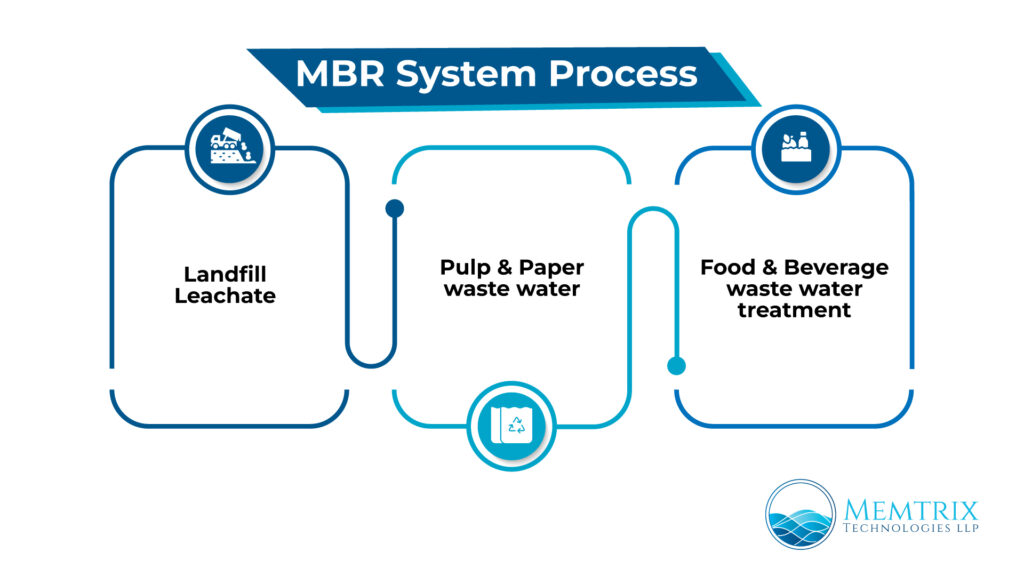
MBR for hospitality uses both advanced membrane filtration and activated sludge processes. MBR uses micro- or ultrafiltration membranes to separate solids, which makes the effluent crystal clear. This is different from traditional STP for commercial buildings, which uses Sequential Batch Reactors (SBRs).
In Simple Terms, How MBR Works
- Biological Treatment: In an aerobic tank, microorganisms break down organic matter.
- Membrane Filtration: Membranes with holes that are 0.01 to 0.4 microns wide filter out bacteria, viruses, and solids. There is no need for secondary clarifiers.
- Disinfection: UV light or chlorine makes sure the water is safe to use again.
Important details:
- Quality of the effluent: BOD <5 mg/L and TSS <1 mg/L (compared to 20–30 mg/L in standard STPs).
- Footprint: 70% smaller than regular plants.
- Automation: PLC controls so that staff only need to intervene when absolutely necessary.
| Feature | Conventional STP | MBR System |
| Space Required | Large (e.g., 500 sqm for 50 KLD) | Compact (150 sqm for 50 KLD) |
| Effluent Quality | Meets discharge norms | Reuse-grade (irrigation/flushing) |
| Energy Use | 0.8-1 kWh/m³ | 0.6-0.9 kWh/m³ (with energy recovery) |
| Sludge Yield | High | 50% less |
MBR easily handles high organic loads from food waste and detergents when treating hotel wastewater.
How MBR Can Change the Game for Hotels and Commercial Buildings
Why should you switch to MBR for hospitality? The return on investment is very good.
- Huge savings on costs
- Lower water bill: A 100-room hotel can save ₹5–10 lakh a year by reusing 30–50% of its wastewater (at ₹50/kl rates).
- Low Opex: Membranes last 5 to 10 years, and automated cleaning cuts labour costs by 60%.
- For example, a 5-star hotel in Mumbai used MBR to recycle water and made back its money in 2.5 years.
- Following the rules and getting certifications
- Meets BIS 10500 standards for reuse that isn’t safe to drink.
- Increases ESG scores: Hotels with systems for reusing building water get 10 to 15 points higher in GRIHA ratings.
- Wins in Space and Scalability
Great for adding on to buildings in busy cities. The size of modular MBR units ranges from 5 KLD (for a small office) to 500 KLD (for a large resort).
- Better quality and dependability
Handles peak loads, like busy check-out times, without losing quality. Effluent has no smell and can be used again for landscaping, making it great for eco-luxury branding.
Effects on the Environment
One MBR system for a 50 KLD hotel stops 18 million litres of freshwater from being taken every year, which is the same as 36 Olympic pools.
Real-Life Examples of MBR in Action
Hotels by Oberoi: Leading the way in water recycling hotels in India
The Oberoi chain put in MBR-based STPs for commercial buildings in Delhi and Bengaluru. What happened? 40% of the water can be reused for irrigation and cooling, and it meets ZLD (Zero Liquid Discharge) standards. “It changed the story we tell about sustainability,” says their FM head.
Business Towers in Ahmedabad
A developer in Gujarat added MBR to a 20-story office building. Hotel wastewater treatment technology that can be used for more than one purpose: 60% of the water is reused in HVAC and toilets, which cuts down on the need for municipal water in areas where it is scarce.
Marriott’s Global Rollout: An International Standard
Marriott’s Asia-Pacific hotels use MBR, which saves 35% of water. In India, ITC properties have similar systems that recycle 70% of greywater.
These cases show that MBR for hospitality pays for itself in 2 to 3 years.
Why MBR is Better for Business Use than Other Options
- MBBR (Moving Bed Bio Reactor): Less expensive at first, but the effluent quality is worse, so it’s not good for reuse.
- SBR: Heavy and bulky, but dependable.
- IFAS (Integrated Fixed-Film Activated Sludge): a mix of two types, but MBR is more compact.
MBR’s membrane technology protects against stricter rules in the future for building water reuse systems in India.
A Step-by-Step Guide for Facility Managers on How to Use MBR
Are you ready to upgrade? This is your plan.
First Step: Figure Out What You Need
- Figure out how much wastewater there is (for example, 200L per guest per day for hotels).
- 60% of the audit sources were greywater and 40% were blackwater.
Second Step: Choose a Vendor and Make a Design
- Capacity: Peak flow +20% buffer.
- The best companies are VA Tech Wabag, Thermax, or local ones like Aquatech (₹30–50 lakh for 50 KLD).
- Use IoT to keep an eye on things in real time.
Third Step: Putting it in place and getting it going
- Time frame: 3 to 6 months.
- Prefab modules cut down on downtime.
Fourth Step: Running and Upkeep
- Every day, check the MLSS levels (3000–5000 mg/L).
- Membrane backwash once a month.
- Capital costs: ₹40–60,000 per KLD; operating costs: ₹10–15 per KLD.
Tip: Start with a pilot (10 KLD) to scale based on data.
Problems and solutions in treating hotel wastewater
There is no such thing as perfect technology. Here’s how to deal with problems:
- High Capex: Get help from subsidies (like 20–30% from MoJS) or green loans.
- Membrane fouling: Air scouring and Clean-In-Place (CIP) protocols add years to the life of the membrane.
- Energy Costs: Adding solar panels cuts bills by 30%.
- Skilled Staff: 90% of operations are handled by vendor AMCs.
Adding specialised microbes to water recycling hotel India increases efficiency by 15%.
The Future: New MBR Technologies Are Coming
By the year 2030, you should expect:
- FO-MBR (Forward Osmosis): No energy needed for hypersaline waste.
- AI Optimisation: Apps that help with predictive maintenance.
- Policy Boost: India’s National Water Mission says that new commercials must reuse 50% of their water.
For developers, MBR for hospitality isn’t just a choice; it’s a way to get ahead in green leasing.
Final Thoughts: Do Something Now for Long-Term Success
Not only is it smart to reuse wastewater in hotels and businesses with MBR systems, it’s also necessary. Hotel wastewater treatment with MBR offers the best value, from lower costs to meeting regulations. Facility managers: Check your setup today. Developers: Include MBR in RFPs for high-value properties.
Are you ready to change your property? Talk to certified professionals and take advantage of hotel India incentives for recycling tap water.
Click here for location: https://maps.app.goo.gl/kj8TTUL64GBkwUh96
Call us or whatsapp us at +91 6355038616
Follow . Share . Like
Additional Read
What is the PVDF Hollow Fibre MBR Membrane? Benefits, lifespan, and uses in industry
How Made-in-India MBR Membranes Can Save Your Plant 30-40% on Membrane Costs
MBR Module Replacement for ZeeWeed 500D: Designed for Better Performance in Wastewater Treatment