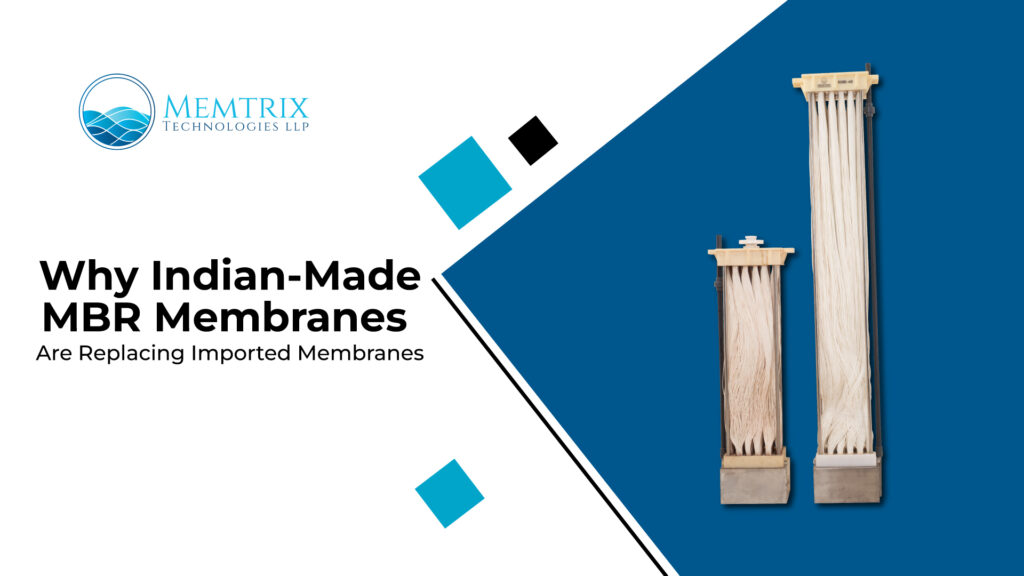
Indian-Made Membranes Replacing Imported Membranes In MBR
Indian-made MBR membranes are gaining strong traction in the wastewater treatment market as they provide a practical balance of cost, performance and availability. For many buyers it is no longer a question of where the membrane is manufactured but whether it performs reliably under real operating conditions. As plants focus more on lifecycle cost and local support, Indian-made solutions are becoming a preferred choice. In many projects they now directly compete with imported membranes and often win on value, service and turnaround time. Changes in membrane procurement The wastewater industry has historically relied on imported components for advanced treatment systems. That preference was often driven by brand reputation, perceived quality and early market maturity. The market is changing today. Indian manufacturers have upgraded the product design, material quality and technical support. As a result, local membranes are now viewed by many project owners as an alternative, rather than a compromise. Pragmatic procurement needs are also driving the move. Buyers want faster lead times, better support for replacements and less reliance on foreign supply chains. Indian made membranes solve many of these problems. Cost advantage is important Cost is one of the main reasons Indian-made MBR membranes are taking the place of imported ones. Higher prices for imported products often result from shipping, customs, currency fluctuations and distributor margins. Indian-made membranes are generally cheaper without compromising the core functionality. That price advantage is especially important for large plants where membrane cost can be a significant part of the project budget. Lower initial cost facilitates upgrade/expansion of systems for project owners. If money is a big issue, a membrane made locally could make advanced treatment more available. Quicker availability and replacement Membrane systems need to be replaced on a periodic basis. “When a membrane fails or performance drops, quick availability is critical. Imported membranes can have long lead times, delays at the border or may not be available. That can lead to increased downtime and slower plant recovery. Indian-made membranes are generally replaceable much faster. The local supply chain means that distributors and manufacturers can respond quickly, which is a big advantage for ongoing plant operations. Better compatibility with Indian conditions Wastewater conditions in India can vary greatly depending on the region, industry and climate. Many plants face the problems of non-uniform influent quality, variable loads and difficult operating conditions. The actual conditions are often closer to those of Indian manufacturers. They know the usual problems faced by Indian STPs, industrial treatment plants and reuse projects. Such local knowledge can improve product design and support that is more useful. The membrane can be tailored to real site requirements, not only to meet global specifications. Getting help and service Membrane selection is a key aspect of technical support. But even the best membrane can under-perform if it is not installed, operated and maintained properly. Indian-made MBR membranes are more likely to be accessible to service teams, installation guidance, troubleshooting support and replacement coordination. This can really help buyers who want a quick resolution to problems. Imported systems can have good product quality, but support can be slower or harder to access. This support locally reduces downtime and instills more confidence in operation to the plant operators. Quality has improved a lot A few years ago, many consumers thought that imported membranes were of higher quality. That perception is changing as Indian manufacturers invest in improved materials, testing and production standards. Many membranes manufactured in India today have high chemical resistance, good mechanical durability and stable filtration performance. Improvements in manufacturing have reduced the difference between local and imported. Not every local product is the same, however. Buyers still have to check specs, test data, membrane life expectations and supplier credibility. But the overall trend in quality is upward. Lower lifecycle cost The choice of membrane involves more than simply the purchase price. The more important measure is life cycle cost. The lifetime cost of the product includes how often you have to replace it, how often you have to clean it, whether support is available, the risk of down time and how much energy it uses. As the Indian membranes are cheaper to replace and more easily sourced locally, the total cost can be reduced. This is especially useful in plants that need to operate predictably for many years. ## Import dependency is decreasing The value of a more maintainable and replaceable membrane may be greater than the value of a slightly cheaper imported product with slower service support. Many companies want to reduce reliance on imported equipment. With supply chain disruptions, shipping delays and exchange rate changes this has become even more important. Companies can avoid some of these risks by using membranes made in India. They provide more control for plant owners over spare parts and replacement planning, as well as making procurement more stable. This independence is useful for industries that can’t afford long downtime. A robust domestic supply base boosts resilience and smoothens project execution. Indian Manufacturing Growth The growth of Indian MBR membranes is also part of the overall growth of domestic water technology manufacturing. More companies are investing in membrane production, testing facilities and application support. The ecosystem is expanding, which increases competition and spurs innovation. Customers benefit from better prices, more product options and improved technical service as more suppliers enter the market. Local manufacturing speeds up customisation as well. Buyers can ask for changes according to application type, water quality or plant layout, which is harder to do with imported products. Applications of Indian membranes MBR membranes manufactured in India are finding use in a wide variety of applications. They include municipal sewage treatment plants, residential and commercial buildings, hotels, campuses and industrial wastewater systems. They are particularly attractive where compact design, reuse potential and cost control are important. Local membranes are also valuable in retrofit projects to avoid delays in a project. For many users the main advantage is ease of use. What they want is a working membrane, one they can … Continue reading Indian-Made Membranes Replacing Imported Membranes In MBR


