One of the main tasks in the maintenance of a membrane bioreactor system is the replacement of MBR membrane. Replacement of membranes in a timely manner is critical to maintain treatment quality, reduce downtime and protect overall plant performance.
Well designed replacement policy also helps in controlling operating cost. Fouling, damage and reduced permeability of membranes operated too long in service can affect the wastewater treatment process as a whole.
Why Replacing the Membrane is Important
In MBR systems, membranes are used to separate the treated water from the mixed liquor. If the membrane performance degrades, the plant may struggle to meet effluent standards.
Membranes suffer from fouling, chemical degradation, mechanical stress and from a gradual loss of performance over time. They don’t last forever, even with good care.
Replacing membranes at the right time will restore system efficiency and minimise the risk of unexpected failure. This means replacement is a capital expense, not an emergency expense.
How Do You Know When to Replace a Membrane?
There are a few warning signs that a replacement membrane may be on its way. The most common one is a permanent increase in transmembrane pressure even after sufficient cleaning.
Another sign is a decline in permeate quality or an increase in turbidity and suspended solids. If the water quality of the treated water is not stable anymore, this could be an indication that the membrane performance is decreasing.
Broken fibres, cracks, or visible wear are other obvious signs of physical damage. Frequent cleaning with poor recovery is another indication the membrane may be near the end of its useful life.
Life of Membranes Depends on Many Factors
There is no fixed schedule for replacement of all MBR systems. Membrane life depends on wastewater quality, operating conditions, cleaning practices and membrane material.
Proper pretreatment and stable influent can extend the life of a plant’s membranes. If a plant has heavy solids, oil, poor process control or aggressive chemical exposure, it may need to be replaced sooner.
That is why membrane life must always be considered in the context of the specific installation. The goal is not to just keep membranes running but to keep them running well.
Planning Replacement Before Failure
It is best to plan for membrane replacement before system failure. That means monitoring performance data over time and catching trends early.
Operators shall monitor pressure, flow, permeate quality, frequency of cleaning and recovery after cleaning. These indicators facilitate the prediction of membrane useful life loss.
By planning the replacements ahead of time, down-time is reduced and the procurement can be done in advance. This is especially crucial for plants that cannot afford treatment interruptions.
Cleaning vs. Replacement
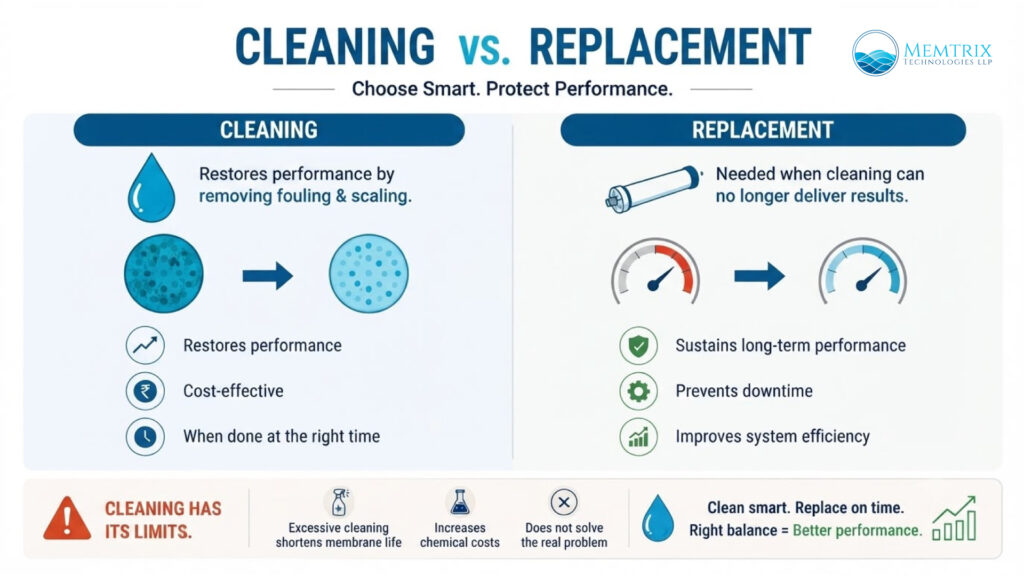
Membrane cleaning and membrane replacement are related, but not the same. Cleaning serves to restore performance by removing fouling and scaling.
But cleaning has its limits. If a membrane can no longer be easily cleaned or if performance can only be temporarily recovered, it is better to replace it.
A lot of operators prolong the replacement cycle by cleaning more often, but this can sometimes cause more harm than good. Excessive cleaning will shorten membrane life and increase chemical costs without solving the real problem.
Preparing for Replacement
Membrane replacement is a lot easier with a good preparation. Begin with a review of the current system design, membrane model, operating history and maintenance logs.
Please confirm the number of modules required, the sequence in which they should be installed and the compatibility with racks, aeration systems and piping. It is also important to know if the new membrane can be used as a direct replacement or if some modifications are required.
Procurement should also be appropriately timed. It is good practice to plan early before the old membranes reach critical condition, as delays in sourcing replacement membranes can create operational risk.
Installation and Initial Start-up
When new membranes come in, they need to be installed properly. Poor handling may damage membranes even before they come into service.”
Technicians should follow the manufacturer’s installation instructions carefully. This includes proper alignment, hook-up, testing and start-up procedures.
During commissioning the system should be checked to operate within the expected range of pressure, flow and air scouring. A carefully designed startup helps to make sure the new membranes perform the way they should, from day one.
Common Replacement Errors
A frequent mistake is leaving the membranes in place for too long. This may cause unsteady treatment performance and emergency shut-downs.
Another mistake is to select a replacement based on price alone. A cheaper alternative may not be as durable, supportive or compatible as the original system.
Wrong handling during installation is another serious problem. Even a good membrane may fail prematurely if damaged in transportation, storage or set-up.
Cost Considerations for MBR Membrane Replacement Instruction
Replacing membranes is a major cost, but should be considered as part of normal plant operation. The question is not whether to spend money, but when and how wisely to do so.
Planned replacement is generally more economical than replacement as an emergency after failure. It helps reduce downtime, protects effluent quality and allows better purchasing decisions.
Buyers must weigh the cost of replacement against the value of ongoing stable operation. Often, it is more economical to replace it in a timely manner than to try to prolong the life of a degraded membrane.
Membrane life can often be extended with good operation, but replacement is inevitable. The proper pretreatment is one of the most effective methods to control fouling and damage. MBR Membrane replacement instruction guide by Memtrix can help you in understanding how and when you should go for it.
Operators should also maintain proper airflow, cleaning routines and load balancing. Operating stably reduces stress on the membranes and helps extend service life.
Regular inspections and performance monitoring can catch problems early. The better the maintenance program, the better the chance that the membrane will continue to perform reliably.
Choosing the Right Replacement Membrane
When replacing MBR membranes, compatibility is key. The new membrane must be compatible with the hydraulic requirements of the plant, rack design, material needs and treatment objectives. MBR membrane replacement instruction by Memtrix Technologies are the best when it comes to choose from.
Other comparisons include fouling resistance, chemical tolerance, expected longevity and service support. A good replacement membrane must have physical fit and performance in the real site conditions.
Specs are important for most plants, but so is local availability and technical support. A good replacement option is one that balances performance, reliability and ease of maintenance.
Conclusion
An effective MBR membrane replacement guide begins with early detection of performance degradation and planning replacement before failure. Plant owners can protect treatment quality and control costs through monitoring operating data, proper system maintenance and selecting the right replacement membrane.
Membrane replacement is not simply a maintenance chore. It helps to keep the whole wastewater treatment system efficient, stable and reliable in the long run.
Ready to optimize? Consult a specialist for a free audit.
Click here for location: https://maps.app.goo.gl/kj8TTUL64GBkwUh96
Call us or whatsapp us at +91 6355038616
Follow . Share . Like
Additional Read
How MBR systems are changing the game for hotels and businesses that reuse wastewater
ETP vs STP vs MBR: Which Wastewater Treatment System is Right for Your Industry?