Water recycling systems help industries cut operational costs by reducing freshwater consumption, lowering wastewater discharge volumes, and improving overall resource efficiency. For many plants, water is not just a utility expense; it is a major operating cost that affects production, compliance, and long-term competitiveness.
By treating and reusing water inside the facility, industries can reduce dependence on external supply and create a more sustainable operating model. This makes recycling systems both a financial and environmental investment.
Why Water Cost Matters
Industries use large volumes of water in processing, cleaning, cooling, washing, and utility operations. As water tariffs rise and supply becomes less predictable, these costs can become harder to control.
Wastewater disposal also adds cost. Plants often need to pay for treatment, transport, compliance, monitoring, or discharge management depending on the site and local regulations.
Water recycling systems help reduce both sides of the equation. They lower the amount of fresh water purchased and reduce the volume of wastewater that must be treated or discharged.
How Recycling Systems Work
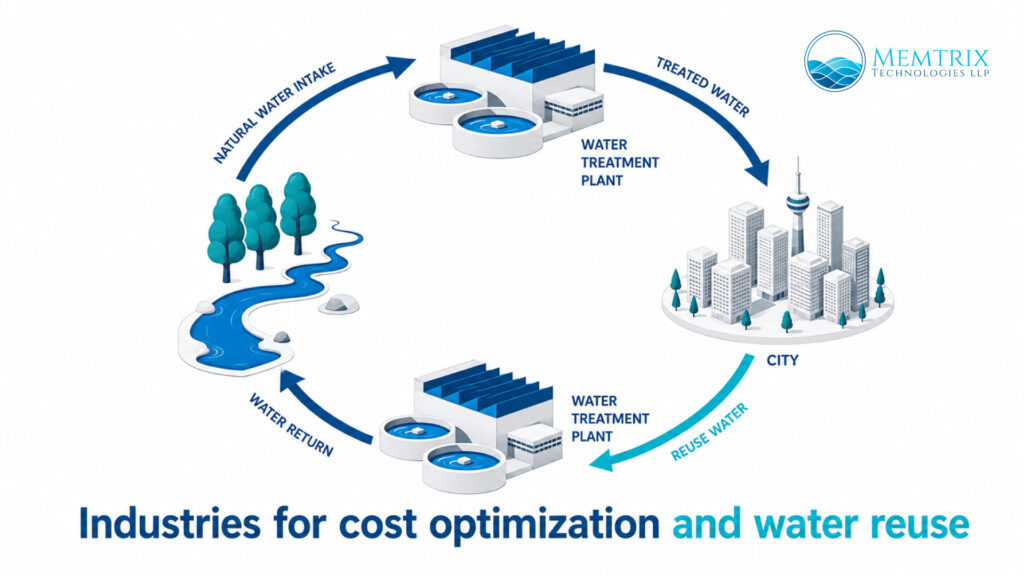
Water recycling systems collect used water, treat it to a suitable quality, and send it back for reuse. The treatment level depends on the intended application.
For example, recycled water used for cooling may need different treatment than water reused for cleaning or washing. In many industrial plants, biological treatment, membrane filtration, and polishing stages are used to make reuse possible.
The main idea is simple: instead of letting water leave the plant after one use, the system keeps it in circulation for as long as practical. That improves resource efficiency and reduces operating expense.
Lower Freshwater Consumption
One of the biggest cost benefits comes from reduced freshwater demand. When an industry reuses water internally, it needs to buy less water from municipal supply or other sources.
This is especially valuable in water-stressed regions where water prices are rising or supply is uncertain. The more water a plant can recycle, the more it protects itself from external price changes.
Over time, reduced freshwater dependence can create major savings. For high-volume users, even a modest recycling rate can make a noticeable financial difference.
Reduced Wastewater Disposal Cost
Water recycling systems also lower wastewater discharge volume. That means less water must be treated as final waste or sent to external disposal routes.
In many facilities, wastewater management is a hidden but significant cost. By reducing discharge, plants can reduce the load on effluent treatment systems and lower associated operating expenses.
This is particularly helpful where discharge rules are strict or disposal fees are high. Reuse turns part of the wastewater burden into a recoverable asset.
Improved Process Efficiency
Water recycling systems can make industrial operations more efficient overall. Instead of treating water as a single-use input, the plant uses it more strategically.
This can reduce interruptions caused by water shortages or supply fluctuations. It can also help maintain more consistent production schedules.
In some industries, recycled water can be integrated into non-critical processes such as washing, cooling, or utility usage. That frees up high-quality freshwater for the most sensitive applications.
Stronger Return on Investment
Although recycling systems require upfront investment, they often deliver a strong return over time. The savings from reduced water purchase and lower discharge cost can offset the installation cost.
The return depends on plant size, water tariffs, wastewater volume, and reuse potential. Facilities with high water use usually see the strongest financial benefit.
A good system should be evaluated over its full lifecycle, not only on capital cost. When water savings continue year after year, the long-term value becomes clear.
Role of Membrane Technology
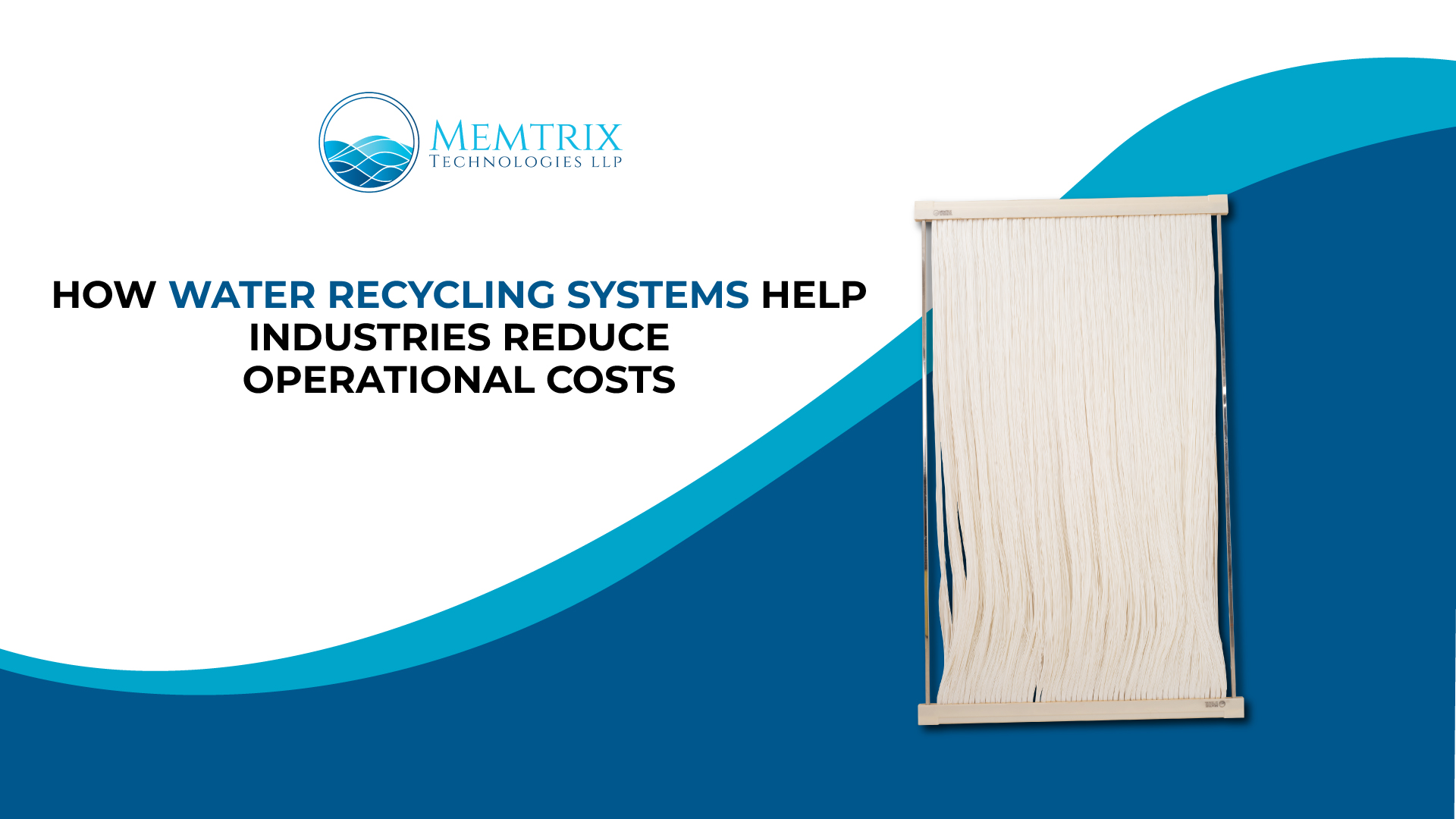
Membrane technology often plays a key role in industrial water recycling. Membranes help produce high-quality treated water that can be safely reused in the plant.
Systems such as MBR, ultrafiltration, and other membrane-based processes are especially useful when consistent effluent quality is needed. They are compact, efficient, and well suited for reuse-focused treatment.
Membranes can help industries recycle water more reliably than conventional treatment alone. That makes them an important part of modern cost-saving water strategies.
Better Compliance and Lower Risk
Water recycling systems can also reduce operational risk. By lowering discharge volumes, they make it easier to stay within environmental limits.
This reduces the chance of non-compliance penalties, production disruption, or emergency treatment costs. In industries with strict regulatory oversight, that stability is valuable.
A plant that manages water well is usually more resilient overall. Lower risk often translates into lower indirect cost, even if it is not always visible on a balance sheet.
Common Industrial Uses
Water recycling is used in many sectors, including textiles, food processing, chemicals, pharmaceuticals, power, and manufacturing. Each industry has different reuse needs, but the cost logic is similar.
Cooling towers, boiler feed preparation, floor washing, utility operations, and process rinsing are common reuse opportunities. Even partial recycling can make a meaningful impact.
The best application is usually the one with large water demand and moderate quality requirements. That combination creates the fastest payback.
Key Design Factors
To get the full cost benefit, the recycling system must be designed around the plant’s actual water profile. Wastewater characteristics, reuse target, and available space all matter.
Pretreatment is essential because it protects the downstream system and improves reliability. A poorly designed system may save less money than expected due to fouling, downtime, or maintenance issues.
Monitoring and automation also improve performance. The more consistently the system runs, the more savings it can deliver.
Long-Term Business Value
Water recycling systems are not just a utility upgrade. They are a strategic investment in cost control, sustainability, and operational resilience.
As water scarcity grows and environmental expectations increase, industries that recycle water are better positioned for long-term success. They spend less on external water, manage discharge more efficiently, and build a stronger sustainability profile.
For many plants, that combination makes recycling systems one of the most practical cost-reduction tools available.
Conclusion
Water recycling systems help industries reduce operational costs by lowering freshwater demand, cutting discharge volumes, and improving process efficiency. When properly designed, they also reduce risk and support more stable long-term operations.
For industries that want both savings and sustainability, water recycling is no longer optional. It is becoming a smart business decision that strengthens performance on multiple fronts.
Reach out to a certified Indian MBR manufacturer today—your profits will appreciate it.
Call us or whatsapp us at +91 6355038616
Follow . Share . Like
Additional Read
What is the PVDF Hollow Fibre MBR Membrane? Benefits, lifespan, and uses in industry
How Made-in-India MBR Membranes Can Save Your Plant 30-40% on Membrane Costs
MBR Hollow Fiber Membranes: Working Principle, Benefits, and Industrial Applications