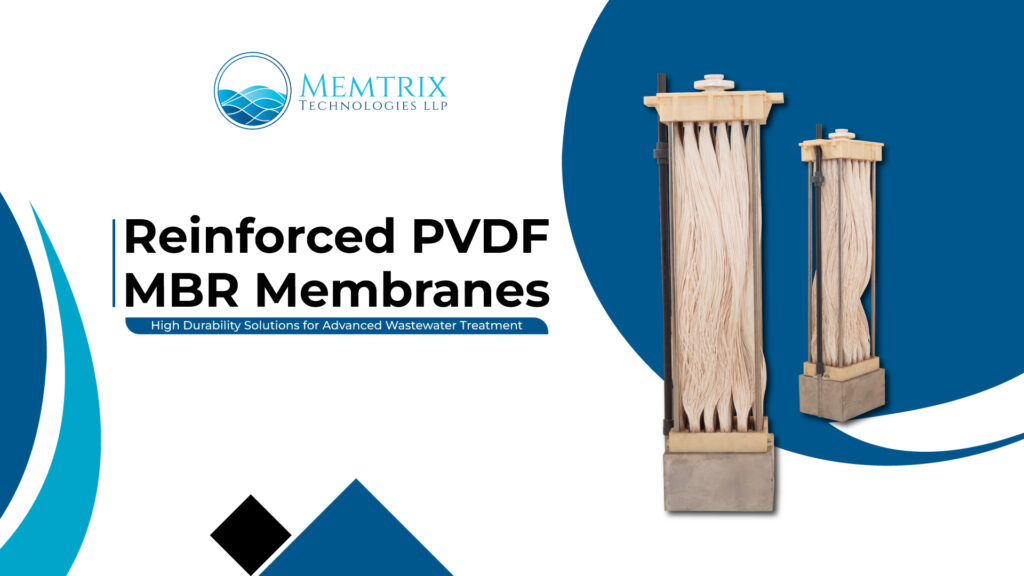
Reinforced PVDF MBR Membranes: High Durability Solutions for Advanced Wastewater Treatment
As global water scarcity increases and environmental rules tighten, industries and municipalities are adopting advanced wastewater treatment technologies to achieve sustainability goals. One of the most dependable and effective innovations in this area is **Reinforced PVDF MBR Membranes**. These membranes offer strong mechanical strength, chemical resistance, and long-lasting performance. They are quickly becoming the go-to choice for modern membrane bioreactor (MBR) systems. In this guide, we look closely at Reinforced PVDF MBR Membranes, how they function, their main benefits, industrial uses, and why they represent the future of advanced wastewater treatment. What Are Reinforced PVDF MBR Membranes? Reinforced PVDF MBR Membranes are high-performance filtration membranes used in MBR systems for wastewater treatment. Made from **polyvinylidene fluoride (PVDF)**, a durable and chemical-resistant polymer, these membranes include internal reinforcing materials like braided tubes or woven supports. The reinforcement greatly enhances tensile strength, breakage resistance, and stability during operation compared to regular membranes. This makes them perfect for tough wastewater treatment settings, including municipal sewage plants and industrial effluent facilities. Understanding MBR Technology Before exploring the benefits of Reinforced PVDF MBR Membranes, it is vital to understand the basics of membrane bioreactor (MBR) technology. MBR systems combine: Biological treatment (activated sludge process) Membrane filtration (microfiltration or ultrafiltration) Rather than relying on gravity-based settling tanks, MBR systems use membranes to separate treated water from biomass. This leads to: Higher effluent quality Smaller footprint Increased sludge concentration Better removal of suspended solids and pathogens When reinforced PVDF membranes are used in MBR systems, the overall performance, reliability, and lifespan improve significantly. Why PVDF Is the Preferred Membrane Material PVDF (polyvinylidene fluoride) is known to be one of the best materials for wastewater treatment membranes. The reasons include: Excellent Chemical Resistance PVDF does not break down easily when exposed to acids, alkalis, oxidants, and cleaning chemicals often used in wastewater treatment. High Mechanical Strength Even without reinforcements, PVDF membranes possess strong mechanical properties. With reinforcements, their durability improves even more. Thermal Stability PVDF keeps its shape under different temperatures, making it suitable for a range of industrial uses. Hydrophilic Modification Compatibility PVDF membranes can be modified to improve water attraction, which reduces fouling and boosts filtration efficiency. These characteristics make Reinforced PVDF MBR Membranes highly reliable in tough operating conditions. Key Advantages of Reinforced PVDF MBR Membranes Superior Durability and Long Service Life A major challenge in wastewater treatment is membrane breakage from aeration and mechanical stress. Reinforced PVDF MBR Membranes feature internal support structures that prevent fiber elongation and rupture. This significantly extends the lifespan of membranes and reduces how often they need to be replaced. Enhanced Resistance to Fouling Fouling is a significant operational concern in MBR systems. Reinforced PVDF MBR Membranes often include optimized pore structures and water-attracting surfaces, which: Reduce organic buildup Minimize biofouling Lower cleaning frequency Maintain consistent flow rate This results in reduced operational costs and steady system performance. High Filtration Precision These membranes usually operate in the microfiltration or ultrafiltration range, effectively removing: Suspended solids (SS) Bacteria Viruses Colloidal particles The outcome is high-quality treated water suitable for reuse. Strong Resistance to Chemical Cleaning Regular chemical cleaning is necessary to keep membranes functioning well. Reinforced PVDF MBR Membranes can withstand repeated exposure to: Sodium hypochlorite Citric acid Caustic cleaning agents This ensures stable, long-term operation without structural damage. Improved Operational Stability Their reinforced structure allows these membranes to maintain consistent permeability and integrity under varying pressure and aeration conditions. Applications of Reinforced PVDF MBR Membranes Reinforced PVDF MBR Membranes are widely used in various industries and municipal sectors. Municipal Wastewater Treatment Cities around the world use MBR systems to meet strict discharge standards. Reinforced PVDF membranes offer: Compact plant design High effluent clarity Reliable pathogen removal Lower sludge production They are especially beneficial in urban areas with limited space. Industrial Wastewater Treatment Industries produce wastewater with complex compositions. Reinforced PVDF MBR Membranes suit: Textile wastewater Pharmaceutical effluent Food and beverage processing Chemical manufacturing Petrochemical industries Their resistance to chemicals ensures reliable performance in tough environments. Water Reuse and Recycling Projects With rising demand for water reuse, high-quality treated effluent is crucial. Reinforced PVDF MBR Membranes allow for: Irrigation reuse Industrial process water reuse Cooling tower water supply Groundwater recharge Their superior filtration meets reuse standards. Decentralized and Containerized Treatment Systems Compact MBR units with Reinforced PVDF MBR Membranes are perfect for: Remote communities Hotels and resorts Construction sites Mining operations Their durability lowers maintenance needs in challenging locations. Structural Design: What Makes Reinforced PVDF MBR Membranes by Memtrix Different? The main difference between standard and reinforced PVDF membranes lies in their internal structure. Reinforcement Layer Reinforced PVDF MBR Membranes usually incorporate: Braided fiber cores Woven mesh support Hollow fiber reinforcement This structural improvement: Prevents fiber breakage Reduces elongation under stress Boosts tensile strength Increases dimensional stability Optimized Pore Structure Advanced manufacturing techniques create even pore distribution, ensuring: High permeability Efficient solid-liquid separation Stable flow rate performance Surface Modification Many reinforced PVDF membranes undergo water-attracting treatment to Improve water absorption Reduce fouling Enhance long-term performance Economic Benefits of Reinforced PVDF MBR Membrane While the initial costs may be higher than regular membranes, Reinforced PVDF MBR Membranes provide significant long-term economic benefits. Lower Replacement Costs Longer service life reduces how often membranes need to be replaced. Reduced Downtime Greater mechanical strength means fewer unexpected failures. Lower Energy Consumption Stable flow rates reduce the need for excessive aeration. Decreased Chemical Usage Better fouling resistance lowers cleaning frequency and chemical consumption. When assessed over their entire lifespan, reinforced membranes often have a lower total cost of ownership (TCO). Environmental Benefits Sustainability is a major focus in wastewater treatment innovation. Reinforced PVDF MBR Membranes help protect the environment by: Enabling water reuse Reducing discharge pollutants Lowering sludge generation Supporting zero liquid discharge (ZLD) strategies Their durability also minimizes waste from frequent membrane replacements. Comparison: Reinforced vs. Non-Reinforced PVDF Membranes | Feature | Reinforced PVDF MBR Membranes | Standard PVDF Membranes | ———————- | —————————– | ———————– | Mechanical Strength | Very High … Continue reading Reinforced PVDF MBR Membranes: High Durability Solutions for Advanced Wastewater Treatment


