Customer testimonials

Lorem ipsum dolor sit amet, consectetur adipiscing elit. 

Lorem ipsum dolor sit amet, consectetur adipiscing elit, sed do eiusmod tempor incididunt ut labore et dolore magna aliqua. Ut enim ad minim veniam, quis nostrud exercitation ullamco laboris nisi ut aliquip ex ea commodo consequat.
Happy
CMO, HappyAddons
Lorem ipsum dolor sit amet, consectetur adipiscing elit, sed do eiusmod tempor incididunt ut labore et dolore magna aliqua. Ut enim ad minim veniam, quis nostrud exercitation ullamco laboris nisi ut aliquip ex ea commodo consequat.
Happy
CMO, HappyAddons
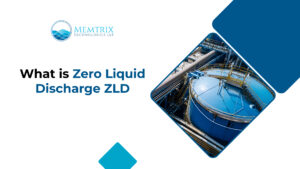
Zero Liquid Discharge wastewater treatment plant for the textile industry using MBR technology, showing modern industrial water treatment tanks and filtration systems by Memtrix Technologies LLP.

Achieving Zero Liquid Discharge in Textile Industry with MBR

There is considerable pressure on the textile industry to bring down water pollution and adhere to higher levels of environmental standards. Due to rising freshwater costs and tighter norms by the pollution control boards, textile processors look seriously for strong, future-proof wastewater solutions. ZLD is quickly becoming the gold standard for sustainable textile effluent management. Advanced membrane bioreactor technology, combined with high-performance textile effluent membrane modules at the heart of a state-of-the-art ZLD system, is playing a decisive role in making compliance achievable and economical. This blog will discuss how hollow fiber MBR systems can help the textile industries achieve ZLD, reduce operating costs, and sustainably achieve stringent discharge norms. Why ZLD is Important in the Textile Industry Textile processing is extremely water-intensive. Every step from desizing and scouring through dyeing and finishing produces large volumes of colored, chemically complex wastewater. Common issues include: High COD and BOD levels Intense color and turbidity High TDS and salinity due to salts and dyes Presence of surfactants, auxiliaries, and finishing chemicals Near-zero discharge or complete ZLD by medium and large textile units is mandated by regulators in many regions. The consequences of non-compliance include: Shutdown notices and production losses Heavy fines and legal actions Reputational damage with brands and buyers Because of this, textile manufacturers are increasingly adopting advanced treatment trains where a reliable textile effluent membrane system forms the backbone of ZLD compliance. What is Zero Liquid Discharge (ZLD)? Zero Liquid Discharge is a technology in wastewater treatment whereby: No untreated liquid effluent is discharged outside the plant boundary. Almost all the water is recovered and reused back in processes Remaining dissolved solids are converted to a solid or semi-solid waste for safe disposal A typical ZLD scheme in the textile industry integrates: Biological treatment (for organic load reduction) Membrane filtration-to produce high-quality permeate Tertiary treatment such as RO Thermal systems, such as evaporators and crystallizers for final brine management In this chain, the RO efficiency and energy consumption, along with the overall operating cost, are directly linked to the performance of the biological and membrane stages. Furthermore, it is here that modern MBR technology, coupled with specialized textile effluent membranes, makes all the difference. Role of MBR in Textile Effluent Treatment An MBR system integrates conventional biological treatment (activated sludge) with membrane filtration in a single, compact system. In these systems, treated water is separated from biomass by submerged or external membranes rather than relying on gravity settling in a clarifier. Key benefits of MBR for textile effluent: Higher MLSS tolerance and better biomass control Very low turbidity and suspended solids in permeate Smaller footprint than conventional ETPs Stable operation even with shock loads in COD and color Firstly, an MBR capable of consistently producing permeate suitable as feed to RO systems, with improved recovery and reduced fouling risk, is feasible provided it is fitted with the right textile effluent membrane modules. Why Textile Effluent Needs Specialized Membranes Textile wastewater is more problematic than ordinary municipal sewage. It would usually contain: Reactive, disperse and vat dyes High surfactant loads from detergents and wetting agents Oil, grease, and finishing chemicals Variable pH and Temperature These characteristics can lead to quick fouling and a short life of membranes. The membrane designed for textile effluent must offer: High chemical resistance for periodic cleaning Robust structure to handle solids and fibers Strong resistance against organic fouling and color adsorption Stable performance during fluctuating operating conditions This is precisely the reason why hollow-fiber MBR modules engineered for textile applications find favor with mills and ETP operators. Principle of operation: Hollow-Fiber MBR modules Hollow-fiber MBR modules are made up of several thousand fine, flexible membrane fibers in a bundle. Wastewater flows around the outside of the fibers, and treated water is sucked through the walls of the fibers to the inside, or lumen, by means of suction. Core features of the hollow-fiber MBR technology include: High surface area per module, leading to compact systems Submerged operation within the bioreactor tank Air scouring to keep the fibers clean and reduce fouling Easy modular scaling for capacity expansion When these hollow-fiber modules are optimized as textile effluent membrane systems, they can tolerate the more extreme wastewater conditions found in dyeing and finishing units while delivering consistently high permeate quality. A typical ZLD treatment sequence for a textile plant using MBR may look something like the following: 1. Pre-treatment Screening, oil & grease removal Equalization tank to dampen flow and load variations pH correction and, if required coagulation–flocculation 2. Biological MBR treatment Aeration tank with mixed liquor (activated sludge) Submerged hollow-fiber textile effluent membrane modules Continuous suction of clear permeate from the membrane fibers 3.Tertiary Treatment and RO Permeate polishing (if required) High-pressure RO system for maximum water recovery 4.Thermal ZLD System Multiple-effect evaporator for RO reject Crystallizer or ATFD (Agitated Thin Film Dryer) for final solids Within this chain, the MBR stage is critical since it removes suspended solids and most organic pollutants, thereby feeding RO with low-fouling, low-turbidity feed water. This directly: Improves RO membrane life Reduces the frequency of chemical cleaning Increasing the overall water recovery percentage By incorporating an efficient textile effluent membrane MBR, mills can design smaller, more energy-efficient ZLD systems. Advantages of Hollow-Fiber MBR for Textile ZLD For textile manufacturers planning or upgrading to ZLD, appropriately selecting an MBR system can significantly improve both compliance and operating economics. Key benefits include: Superior permeate quality The effluent membrane modules made of hollow-fiber textiles achieve low SDI, turbidity, and suspended solids for ideal RO feed. Compact plant footprint Higher biomass concentrations in MBR equate to much smaller bioreactors and no large secondary clarifiers. Operational stability MBR systems manage fluctuations in flow and load much better than conventional ETPs, ensuring that discharge quality is maintained consistently even in peak production. Lower sludge generation Optimized biological conditions ensure less production of excess sludge, hence minimizing the handling and disposal costs. Ease of expansion Additional hollow fibre modules can be added modularly as production increases, without major civil

Read More »
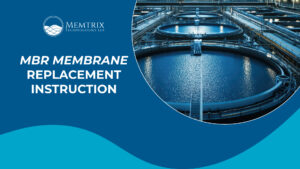
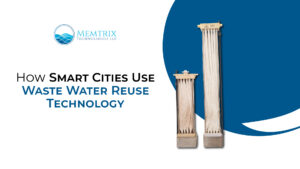
Municipal water reuse solution using hollow fiber MBR membranes by Memtrix Technologies for smart city wastewater treatment

Municipal Water Reuse and Smart Cities: The Use of Hollow Fiber MBRs

MBR for Water Reuse India’s urban population is expanding at an unprecedented rate. As a result, with rising demands for water and limited water resources, it becomes increasingly difficult for government authorities to treat wastewater as mere “waste.” As a result, there is a growing realization about the importance of treated wastewater as an emerging source of water, which will help fuel India’s Smart Cities. At the heart of this paradigm shift is the latest treatment technology, particularly hollow fiber Membrane Bioreactors (MBRs). As a solution for utilities, consulting bodies, and urban planners seeking municipal MBR India options, the hollow fiber MBR technology represents an attractive approach for reliable and high-quality water recycling. Within this article, we steer our focus towards examining the impact municipal water reuse will have on intelligent cities, why hollow fiber MBRs are emerging as a preferred alternative, and its implications on next-generation India. The Importance of Municipal Water Reuse in India India finds itself stuck between these two problems: it lacks water, and it also has polluted water. Groundwater resources are depleting, and the rivers and lakes are under stress due to untreated sewage. It presents three pressing demands for local authorities and smart city planners: – Reduce dependence on freshwater sources for non-potable purposes – Lower pollution loads due to more stringent discharge standards – Develop water systems that will be more resilient and allow urbanization Municipal water recycling addresses these challenges by treating wastewater to a level acceptable for use as: – Irrigation for Parks, Green Belts, and Landscapes -Industrial process water and cooling water – Construction activities and road washing – Groundwater Recharge (where permitted) – Non-potable uses: flushing, etc. However, this can only be ensured if municipalities are constantly producing high-quality treated water. That’s exactly what MBR for water reuse technology is doing for India in terms of municipal sewage treatment. Comprehending MBR Technology for Municipal Use A Membrane Bioreactor (MBR) integrates two major steps within a single system: 1) Biological process (such as conventional activated sludge), involving microbial decomposition of organics, nitrogen, and various contaminants. 2) Membrane filtration, wherein membranes physically separate treated water from biomass and suspended materials. Secondly, instead of using a secondary clarification stage, it uses a membrane. Consequently, the membrane functions as a barrier and thus produces a clarified liquid with very low turbidity and almost no suspended materials. For MBR India projects for municipalities, there are several benefits offered by this combo: – High standards for effluent quality – Reuseable effluents – The effluents should – Smaller footprint compared with traditional ASP or SBR systems. – Increased mixed liquor strength that facilitates more flexible designs – Robust performance under varying loads common for city sewage As far as membrane arrangements are concerned, hollow fiber MBR for water reuse have been widely adopted for municipal projects due to various reasons. How Do Hollow Fiber MBRs Differ In hollow fiber membrane bioreactors, membrane modules are made up of thousands of thin fibers, which resemble straws and are bundled together. The fibers have microscopic pores that allow water to pass while preventing particles and bacteria. Key characteristics: – High packing density: large membrane area per unit module size – Submerged operation: The modules are submerged either in the bioreactor basin or a membrane tank. – Outside-in or inside-out filtration: The feedwater passes over the fibers and filtration occurs on either the lumen side or shell side, depending on the membrane configuration. Regarding municipal sewage, this configuration provides efficient treatment with feasible operating costs, so hollow fiber modules are suited for a smart city. According to Taqat, India will be witnessing an ever-increasing number of India’s Smart Cities Mission focuses on sustainable infrastructure, efficient resource utilization, and enhancing the quality of life. Water reuse and treatment appear fundamental within it. Hollow Fiber Membrane Bioreactors fulfill these aims based on several factors: 1) Space efficiency and modularity It should be noted that the cost and availability of land are factors that affect urban – Land cost – Existing infrastructure – Dense surrounding development Hollow Fiber MBRs enable higher mixed liquor and eliminate the need for secondary clarification, which translates to: – Cost savings due to decreased costs associated with sludge production and – 40-60% smaller size compared with traditional technologies – Easy retrofits for existing sewage treatment facilities – Modular scaling capabilities for alignment with phased city developments Regarding brownfield upgrade projects, a possible remedy with legacy low-perform- ing STPs might be an upgrade to municipal MBR systems. It would allow brownfield sites to comply with new standards without requiring extensive land acquisition. 2) High-quality effluent for direct reuse Smart city planners seek treated water that can be substituted for freshwater for various uses. The hollow fiber MBRs offer: – Extremely low suspended solids (<5 mg/L) – Lowered pathogen presence – Low turbidity, helping with downstream disinfection By simple polishing or disinfection/tertiary treatment, MBR-filtered water can be made acceptable for reuse as: – Landscaping and gardens – Cooling towers and industrial processes – Construction and infrastructure cleaning – Flushing networks (with proper dual piping) This renders hollow fiber MBRs a technologically desirable solution for integrated municipal water-reuse projects within India’s Smart Cities. 3) Compliance with tougher environmental standards BOD, COD, TSS, pathogen, and nutrient limits are being reduced. Conventional plants with intermittent operation have problems with variable production rates. MBRs, particularly with high-performance hollow fiber membranes, have these advantages: – Stable and predictable effluent quality – Improvement in sludge age and stability control – Effective biomass-water separation As societal norms and practices continue to change, municipal MBR solutions assist in making water and sewer infrastructure ‘future 4) Integration with Smart Monitoring and Automation Smart cities are data- and automation-dependent. New generation hollow fiber MBR facilities can be integrated with SCADA or cloud-based solutions for: – Real-time monitoring of flow rates, transmembrane pressures, and membrane status – Predictive Maintenance and Optimal Cleaning – Operations and remote debugging It enhances decision-making, reduces downtime, and enables efficient operation and maintenance, which is

Read More »
MBR wastewater treatment solution for hotels and commercial buildings by Memtrix Technologies LLP, offering compact and efficient sewage and wastewater management systems.

MBR for Hotels and Commercial Spaces: Compact Wastewater Solutions

Hotel Wastewater Treatment – Introduction With growing water scarcity, environmental regulations, and sustainability expectations around the world, hotels and commercial buildings are under increasing pressure to manage their wastewater more intelligently. Present-day guests expect eco-friendly operations, while regulators demand compliance with strict discharge and reuse standards. That is where the membrane bioreactor technology comes in. MBR systems provide compact, efficient, and reliable hotel wastewater treatment, and this makes it easier for properties to recycle and reuse water safely without having huge treatment plants or large areas of land. In this blog, we explore what MBR is, why it is ideal for hotels and commercial spaces, and how it helps properties reduce costs, save space, and improve sustainability. What is MBR in Wastewater Treatment? An MBR is an advanced wastewater treatment technology that uses two processes: Biological treatment by conventional activated sludge Membrane filtration (micro- or ultrafiltration) Conventional wastewater treatment relies on the separation of clarified water from sludge through large settling tanks; in MBR systems, this is substituted by submerged or external membranes that physically filter out the suspended solids, bacteria, and many pathogens. This produces: Very high-quality treated water Much smaller footprint than traditional plants Flexibility and stability of operation with fluctuating loads For hotel wastewater treatment, MBR is of particular attraction since hotels usually have limited space but require high-quality effluent for reutilization in flushing, gardening, and cooling towers. Why do hotels require effective treatment to deal with wastewater? Hotels use large quantities of water each day for: Guest rooms and bathrooms Laundry Kitchen and food & beverage operations Swimming pools and spas Landscaping and common areas All this water consumption produces a corresponding quantity of wastewater, which must be disposed of safely. Key problems that hotels encounter include the following: Limited land availability: In all urban, resort, and hill station properties, there is hardly any spare land available for big treatment plants. Flow Variability: Occupancy varies seasonally as well as on a week-to-week basis which impacts flow and loading on the wastewater system. Strict local regulations: Discharge norms for BOD, COD, TSS, and pathogens are becoming very stringent. Water prices increasingly rising and scarcity: Freshwater is expensive or scarce in many areas with the growing borewell restrictions. Expectations of guests: Today’s travelers want sustainable, “green” hotels with a responsible use of water. A compact, reliable hotel wastewater treatment system is no longer optional; it is an integral part of responsible, cost-effective hotel operations. Overview of MBR Technology for Wastewater Treatment in Hotels A typical MBR system for a hotel is in the following stages: Pre-treatment Large solids, hair, plastics, and flow variations are removed by screens and equalization tanks. Biological treatment In the aeration tank, microorganisms break down organic material, reducing the BOD and COD. Membrane filtration Instead of allowing the mixture to settle in a clarifier, the mixed liquor is passed through membranes. The pore size of these membranes is very small-usually in the range of micro- or ultrafiltration-and suspended solids and most bacteria are retained by Collection of treated water Resulting filtrate is of high-quality, treated water with low turbidity and low levels of pathogens, suitable for non-potable reuse. Disinfection and reuse – Optional, but common Additional disinfection by UV, ozone, or chlorination will ensure that the treated water is safe for applications such as toilet flushing, gardening, and cooling towers. Because of the membrane step, an MBR system achieves much better effluent quality compared to conventional systems. This is a major advantage in hotel wastewater treatment where reuse is a priority. Benefits of MBR Systems for Hotels Compact footprint Space is a premium factor in most hospitality projects, be they city hotels, airports, or commercial complexes. MBR systems: Require much smaller tank volumes than conventional activated sludge Reduces the requirement for large secondary clarifiers Can be stacked or containerized for basement or rooftop installation For a hotel, this means advanced hotel wastewater treatment can be fitted into small service areas without sacrificing revenue-generating space. High-quality treated water that is reusable MBR-treated water is generally: Low in BOD, COD, and TSS Free from turbidity and clear Significantly reduced in bacteria and pathogens This quality makes it ideal for: Toilet flushing Garden and landscape irrigation Cooling tower make-up water Floor washing and other non-potable uses Hotels will be able to reduce reliance on municipal supply or groundwater through reutilization of treated water and thus save a substantial amount of operational cost. Stable performance under fluctuating loads Occupancy in hotels may go up and down with seasons, events, or tourism trends between 30% to 100%. MBR systems handle these variations better because High biomass concentration within the bioreactor imparts process stability. Membrane separation is less sensitive to hydraulic shocks than clarifiers Automation and controls can dynamically adjust aeration and permeate rates This flexibility makes MBR a reliable choice for hotel wastewater treatment, even in unpredictable environments. Better odor and aesthetics Poorly managed conventional systems can generate odour, scum and aesthetic problems that impact on guest experience. MBR systems are: Generally enclosed and more controlled Less likely to produce foul odors when properly designed and operated Able to produce clear, colourless effluent that reassures stakeholders Aesthetics in hotels and commercial places are important, and a clean, odor-free plant helps with branding. To adhere to rigorous regulations Many local bodies and pollution control boards are now requiring: Low BOD and COD in treated effluent High removal of suspended solids and pathogens Compulsory reutilization of a certain percentage of wastewater at large buildings MBR technology helps properties consistently meet and often exceed these standards, reducing the risks of compliance and potential penalties. Beyond hotels, MBRs apply to commercial spaces. MBR systems are not restricted to hospitality. They are equally suitable for: Shopping malls and commercial complexes  Office parks and IT campuses Airports and railway stations Hospitals and health facilities Mixed-use developments and townships These facilities, like hotels, face similar challenges: limited space, high water use, and strict environmental norms. Compact MBR plants can allow for centralized reuse and treatment

Read More »
Wastewater treatment plant using ultrafiltration technology — membrane filtration process for recycling industrial wastewater and improving water purity.

Ultrafiltration Membrane Module in Wastewater Recycling Explained

Introduction: The Future of Water Reuse Lies in Ultrafiltration Water scarcity is no longer a looming threat — it’s a present-day reality for industries worldwide. As the demand for sustainable water management grows, ultrafiltration membrane modules have emerged as a key enabler of wastewater recycling and reuse. From textile dye effluents to food processing plants and municipal sewage, ultrafiltration (UF) plays a crucial role in transforming contaminated water into a reusable resource. This article breaks down everything you need to know about ultrafiltration in wastewater recycling — how it works, what makes it effective, where it’s used, and why the ultrafiltration membrane module is fast becoming the preferred choice for industrial water treatment systems. What Is Ultrafiltration (UF)? Ultrafiltration is a pressure-driven membrane filtration process that separates suspended solids, oils, bacteria, and macromolecules from water. It acts as a physical barrier that allows water and small dissolved substances to pass through while rejecting particles and microorganisms larger than the membrane pores (typically 0.01 to 0.1 microns). The heart of every UF system is the ultrafiltration membrane module — a compact assembly containing hundreds or thousands of hollow fibers or flat sheets that perform the filtration task. These modules are designed to provide high surface area, durability, and easy cleaning for long-term operation. How Ultrafiltration Membrane Modules Work Ultrafiltration operates on a simple principle: applying pressure to drive water through a semipermeable membrane. The feedwater passes along the surface of the membrane fibers, and clean water (called permeate) passes through the membrane pores. The retained contaminants form a concentrate stream, also known as the retentate. Key components in an ultrafiltration system: Feed pump: Pressurizes the incoming wastewater. UF membrane module: Houses the membranes that perform separation. Permeate outlet: Collects purified water ready for reuse or further treatment. Concentrate outlet: Discharges the retained particles or directs them for sludge management. Two typical UF flow configurations: Dead-end filtration: All feedwater passes through the membrane; solids accumulate on the surface. Cross-flow filtration: Part of the feedwater flows parallel to the membrane to minimize fouling and flush out impurities. The Science Behind UF: Filtration by Molecular Size To understand the power of UF membranes, it helps to look at how it compares with other filtration methods. The ultrafiltration membrane module sits between microfiltration and nanofiltration on the filtration spectrum. Filtration Type Pore Size (µm) Retains Application Example Microfiltration 0.1 – 1.0 Suspended solids, large bacteria Pre-filtration before UF or RO Ultrafiltration (UF) 0.01 – 0.1 Bacteria, colloids, proteins, organics Industrial wastewater treatment Nanofiltration 0.001 – 0.01 Divalent ions, small organics Softening, colour removal Reverse Osmosis (RO) <0.001 Dissolved salts, all ions Desalination, ultrapure water With a typical pore size of 0.03 microns, UF membranes effectively remove 90–99% of suspended solids and most microorganisms — making them ideal as a pretreatment step before RO or as a standalone polishing process in wastewater reuse systems. Materials and Design of Ultrafiltration Membrane Modules Modern ultrafiltration membranes are engineered for both robustness and selectivity. Common materials used include: Polyethersulfone (PES): Popular for its high permeability and chemical resistance. Polyvinylidene fluoride (PVDF): Known for strong mechanical strength and fouling resistance. Polysulfone (PS): Excellent for high-flow industrial systems with strong caustic tolerance. Ceramic membranes: Used in high-temperature or highly contaminated wastewater for longer lifespan. Membrane module configurations: Hollow fiber modules: Thousands of thin fibers enable high surface area in a compact design. Spiral wound modules: Flat-sheet membranes rolled around a central tube for higher flux applications. Tubular modules: Preferred for viscous wastewater streams like dairy, brewery, or oil effluents. Each ultrafiltration membrane module is optimized for flow rate, recovery, and cleanability depending on the industry and application. Advantages of Ultrafiltration in Wastewater Recycling Ultrafiltration is gaining popularity because it combines efficiency, reliability, and sustainability. Here’s why industries are adopting UF-based recycling systems: High-quality permeate: Produces crystal-clear water free from bacteria and turbidity (<0.1 NTU). Low chemical usage: Operates primarily on physical separation, minimizing chemical additives. Compact and modular design: UF membrane modules can be easily scaled up or replaced. Reduced sludge production: Compared to conventional clarification systems. Stable operation: Resistant to feedwater fluctuations common in industrial waste streams. Pretreatment for RO systems: Protects downstream reverse osmosis membranes from fouling and scaling. Energy-efficient: Operates under low pressure (1–5 bar) compared to RO systems. Collectively, these advantages translate into lower operating costs, smaller footprints, and improved water recovery rates. Common Applications of UF Membrane Technology Ultrafiltration is no longer limited to municipal facilities — it finds application across diverse industries. Textile and Dyeing Industry: Removes dyes, suspended solids, and sizing agents from process water. UF-treated water can be reused for dye bath preparation or rinsing operations. Food and Beverage Processing: Concentrates proteins, purifies process water, and ensures reuse without contamination. UF systems are used in cheese whey concentration, sugar syrup clarification, and beverage filtration. Pharmaceutical Manufacturing: Provides microorganism-free water for cooling, cleaning, and product formulation processes. Oil and Gas Sector: Treats produced water, oily wastewater, and reinjection water by removing hydrocarbons and suspended solids. Automotive and Metal Finishing Plants: UF modules efficiently remove oil emulsions and paint residues from rinse water, allowing cost-effective recycling. Municipal and Domestic Wastewater: Enhances tertiary treatment by polishing secondary effluent to achieve high-quality reclaimed water for non-potable reuse. Cleaning and Maintenance of UF Membrane Modules Fouling — the accumulation of unwanted materials on the membrane surface — is inevitable in UF systems. Regular cleaning and maintenance ensure long-term stability and performance. Cleaning methods include: Backwashing: Reversing flow periodically to remove surface deposits. Air scouring: Releasing air bubbles to physically disrupt fouling layers. Chemical Cleaning-in-Place (CIP): Using mild alkalis, acids, or disinfectants to dissolve organic and inorganic foulants. Maintenance cycles: Typically every 30–60 minutes of operation, depending on feed quality. Manufacturers design ultrafiltration membrane modules for easy cleaning access and automated backwash cycles, reducing downtime and maintenance costs. Integration with Other Treatment Processes UF systems often work as part of a multi-stage treatment chain. For maximum water recovery and purity, UF is commonly paired with: Coagulation–flocculation: Removes larger

Read More »
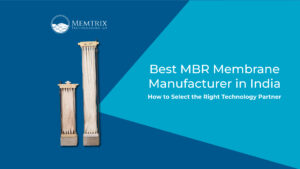
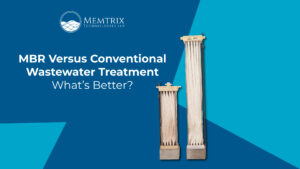
Large and small hollow-fiber membrane modules manufactured by Memtrix Technologies LLP for water purification and wastewater treatment systems

Understanding Membrane Fouling & How to Prevent It

Membrane systems play a crucial role in industries ranging from wastewater treatment and food processing to pharmaceuticals and desalination. However, one persistent challenge that reduces system efficiency, raises maintenance costs, and shortens equipment life is membrane fouling. Understanding why fouling occurs and how to prevent it through effective membrane fouling solutions is essential for sustainable and cost-efficient operations. In this guide, we’ll explore the fundamentals of membrane fouling, its major causes, types, and practical solutions to keep your filtration systems performing at their best. What is Membrane Fouling? Membrane fouling occurs when unwanted materials accumulate on the surface or within the pores of a membrane, reducing its permeability and flux. In simple terms, fouling clogs the membrane, forcing operators to use more energy and frequent cleaning to maintain system performance. When left unchecked, membrane fouling can cause: Reduced water flow and lower permeate quality Increased trans-membrane pressure More frequent chemical cleaning cycles Shortened membrane lifespan Higher overall operational costs Therefore, early identification and implementation of membrane fouling solutions can mean the difference between a smoothly running filtration system and one plagued by inefficiency. Common Types of Membrane Fouling Membrane fouling varies depending on the feed water composition, operating conditions, and membrane material. The major types include: Particulate or Colloidal Fouling This type occurs when suspended solids, silt, or fine particles settle on the membrane surface. These particles create a dense cake layer that restricts flow and increases pressure. Typical sources: raw water with high turbidity, insufficient pre-filtration, or inadequate sedimentation. Organic Fouling Organic fouling is caused by natural organic matter such as humic acids, oils, fats, and surfactants. These materials adhere strongly to membrane surfaces, reducing permeability and complicating cleaning. It is common in municipal wastewater, industrial effluent, and food processing applications. Biofouling Biofouling results from microbial growth on the membrane surface. Bacteria attach to the surface and produce extracellular polymeric substances (EPS), forming a sticky biofilm that significantly hampers system efficiency. This is one of the most complex and persistent fouling types, often requiring a mix of physical and chemical membrane fouling solutions. Scaling (Inorganic Fouling) Scaling occurs when dissolved inorganic salts such as calcium carbonate, calcium sulfate, or silica precipitate and crystallize on the membrane surface. Once formed, these scale layers are difficult to remove and can cause irreversible damage. Key Causes of Membrane Fouling Fouling is a multifactorial problem, influenced by several operational and environmental conditions. Understanding these root causes helps in selecting the right prevention strategy: Feed Water Quality: High concentration of suspended solids, organic matter, or biological contaminants accelerates fouling. Improper Pretreatment: Insufficient filtration, inadequate coagulation, or poor pH control before water enters the membrane system. Operating Pressure and Flow Rate: Low crossflow velocity or high pressure can enhance particle deposition on the membrane surface. Temperature: Higher temperatures promote biological growth and alter solubility, increasing scaling risks. Membrane Material: Some membranes are more prone to adhesion of specific types of foulants based on their surface characteristics. How Membrane Fouling Impacts System Efficiency The consequences of membrane fouling go beyond reduced water output. The long-term effects can cripple system economics and sustainability: Energy Consumption: As fouling increases resistance, more pressure—and therefore more energy—is needed to maintain desired flux. Frequent Downtime: Regular chemical cleaning or membrane replacement interrupts operations. Higher Chemical Use: Overuse of cleaning agents adds to environmental load and operational costs. Membrane Degradation: Aggressive cleaning can damage the membrane surface, reducing its lifespan. To combat these challenges, industries implement advanced membrane fouling solutions that combine physical, chemical, and operational controls for lasting results. Effective Membrane Fouling Solutions Managing membrane fouling involves preventive design, optimized operations, and smart cleaning techniques. Below are the most effective strategies implemented in modern membrane systems. Pretreatment Optimization High-quality pretreatment is the foundation of every effective fouling prevention plan. Depending on water type, this may include: Microfiltration or Ultrafiltration: To remove fine particles and organic matter before reverse osmosis (RO) or nanofiltration stages. Coagulation and Flocculation: Adding coagulants helps form larger particles that are easier to filter out. Activated Carbon Filtration: Effective in removing organic compounds and residual chlorine that can damage membranes. pH Control: Maintaining optimal pH minimizes scaling potential. Regular Monitoring and Automation Installing sensors for differential pressure, temperature, pH, and conductivity helps identify early fouling signs. Automated data logging and AI-based predictive maintenance reduce the need for manual intervention and unplanned downtime. Optimizing Operating Conditions Adjusting flow rates, pressure, and recovery levels helps minimize fouling buildup. A higher crossflow velocity reduces boundary layer thickness and discourages particle deposition. It is advisable to maintain a stable feed water temperature and avoid drastic changes that can destabilize solubility balances or bio-growth rates. Anti-Fouling Membrane Materials Modern membranes are designed with surface modifications that repel foulants. Technologies like hydrophilic coatings, surface charge adjustments, or nanocomposite materials improve fouling resistance without compromising permeability. For example: Hydrophilic polymers minimize organic adhesion. Positively charged surfaces deter biofilm growth. Nanoparticle coatings enhance smoothness, reducing attachment points. Chemical Additives and Antiscalants Adding antiscalants, dispersants, or biocides to the feed water can significantly slow fouling progression. However, the choice of chemicals must suit both the foulant profile and membrane material. Antiscalants control crystal growth and delay scaling. Biocides (like chlorine derivatives) control microbial population, though exposure should be limited to chlorine-resistant membranes or neutralized before contact. Dispersants prevent aggregation of colloids and organic materials. Scheduled Cleaning and Maintenance Even with preventive methods, periodic cleaning is inevitable. Successful cleaning programs consider: Physical cleaning: forward flushing, backwashing, or air scouring to dislodge particles. Chemical cleaning: acidic, alkaline, or enzymatic cleaners formulated for specific foulants. Clean-in-place (CIP) systems automate the process for efficiency and consistency. Maintaining a record of cleaning frequency and performance helps identify patterns for improved control of fouling cycles. Advanced Technological Approaches As industries demand higher efficiency, newer analytical and operational technologies are advancing membrane fouling solutions further. Electrochemical Cleaning: Uses electrical current to break down biofilms or scale layers without harsh chemicals. Ultrasonic Cleaning: Waves disrupt foulant layers mechanically, reducing chemical dependency. AI-Powered Monitoring: Machine

Read More »
Hollow fiber membrane modules by Memtrix Technologies LLP used for water filtration and wastewater treatment, showing bundled membrane fibers mounted in frame.”

What Is a Hollow Fiber Membrane? Working Principle & Key Advantages

Hollow fiber membranes are revolutionary filtration devices widely used in water treatment technology, especially gaining traction in India. These membranes are fine filters consisting of tiny hollow tubes that act as selective barriers, allowing water and small molecules to pass through while retaining impurities like bacteria, suspended solids, and large molecules. This makes hollow fiber membranes ideal for wastewater treatment, drinking water purification, and numerous industrial applications. What Is a Hollow Fiber Membrane? A hollow fiber membrane is a type of semi-permeable membrane made up of thousands of tiny hollow tubes, each with microporous walls. These tubes have diameters typically from 0.3 to 1.4 millimeters. The walls contain billions of micropores that allow selective filtration based on size and molecular weight. This further enables the passage of water molecules and beneficial minerals while blocking contaminants such as bacteria, viruses, rust, colloids, and suspended solids. The structure of hollow fiber membranes provides a large surface area per unit volume, making them highly efficient.​ Working Principle of Hollow Fiber Membranes Hollow fiber membranes operate based on a pressure-driven filtration principle. Raw or contaminated water is passed either inside the hollow fibers or on their outer surface. A pressure difference across the membrane forces water molecules through the micropores, while larger particles and contaminants are retained outside or inside the hollow fiber lumen. Because the membrane’s micropores are tiny—often around 0.01 to 0.2 micrometers—the filtration process effectively removes bacteria, viruses, and suspended solids. The filtration process is continuous and dynamic. Further, it often employs cross-flow filtration where contaminants are flushed away, preventing clogging and enabling longer operational life. The membranes are designed to work efficiently at low pressures (around 0.02 MPa or higher). Memranes are with excellent durability and extensibility, ensuring they can withstand industrial water treatment environments.​ Key Advantages of Hollow Fiber Membranes in India India’s growing need for innovative wastewater solutions has made hollow fiber membranes a preferred technology due to their multiple advantages: High Filtration Efficiency: They effectively remove microbiological contaminants such as bacteria, viruses, and fungi, achieving safe, potable water output, crucial for India’s water safety challenges.​ Energy-Efficient and Cost-Effective: These membranes operate at low pressure. It reduces energy consumption compared to other filtration systems. They also require minimal chemicals, making them cost-effective and eco-friendly.​ Compact and Space-Saving: The hollow fiber configuration offers a large filtration area in a small footprint, ideal for space-constrained setups common in Indian urban and rural settings.​ Durability and Longevity: Advanced membrane materials used in India demonstrate high mechanical strength and chemical resistance, leading to longer service life and reduced replacement costs.​ Versatility and Adaptability: Hollow fiber membranes can be used in a variety of applications, from municipal wastewater treatment to industrial process water recycling or even portable water purification devices for rural areas.​ Environmentally Friendly: The process generates no chemical waste, aligning with India’s increasing environmental regulations and sustainability goals.​ Applications of Hollow Fiber Membranes in India Hollow fiber membrane technology is utilized extensively for: Municipal wastewater treatment to meet discharge standards. Drinking water purification in both urban and rural areas, including remote locations where conventional systems are impractical. Industrial water recycling and reuse. Pre-treatment for reverse osmosis systems to extend membrane life and efficiency. Portable water purification devices for disaster relief and community use. Why Choose Hollow Fiber Membrane Technology? Firstly, choosing hollow fiber membranes ensures high-quality water treatment with lower operational costs, improved reliability, and sustainability. Moreover, in India, where water contamination poses severe health risks and large-scale water scarcity is a concern. This technology offers a practical, scalable solution that addresses these challenges effectively. Actually, for companies operating in hollow fiber membrane manufacturing and deployment in India, highlighting these benefits in product offerings and marketing appeals strongly to industries and municipalities. It aims for cost-efficient, reliable water management solutions. By integrating hollow fiber membrane technology, India can enhance its wastewater treatment infrastructure, improve public health, and advance towards sustainable water use. This cutting-edge solution underscores why hollow fiber membranes are leading the charge in India’s wastewater technology landscape. Call us or whatsapp us at +91 6355038616 Follow .  Share .  Like Linkedin Youtube

Read More »
Lorem ipsum dolor sit amet, consectetur adipiscing elit. Ut elit tellus, luctus nec ullamcorper mattis, pulvinar dapibus leo.
John Doe
Designer
Lorem ipsum dolor sit amet, consectetur adipiscing elit. Ut elit tellus, luctus nec ullamcorper mattis, pulvinar dapibus leo.
John Doe
Designer

Contact Us

Thank You for Your Submission!